Orange County's licensed locksmith.
Lockouts, rekeys, smart locks, storefront, automotive, and safes — dispatched across every OC city.
- Lockouts
- Rekeys
- Smart Locks
- Storefront
- Auto Keys
- Safes
- Non-destructive entry
- Background-checked techs
- Mobile workshop on every truck
Find the nearest tech in seconds
Share your location and our dispatch console will ping every BSIS-licensed unit within 5 miles and return a live ETA.
Avg locksmith dispatch: 15–30 min
What we do
Every lock. Every door. Every vehicle.
Ten specialized service lines, one licensed team. Tap any card to see real jobs, pricing factors, and book a tech.
View all services →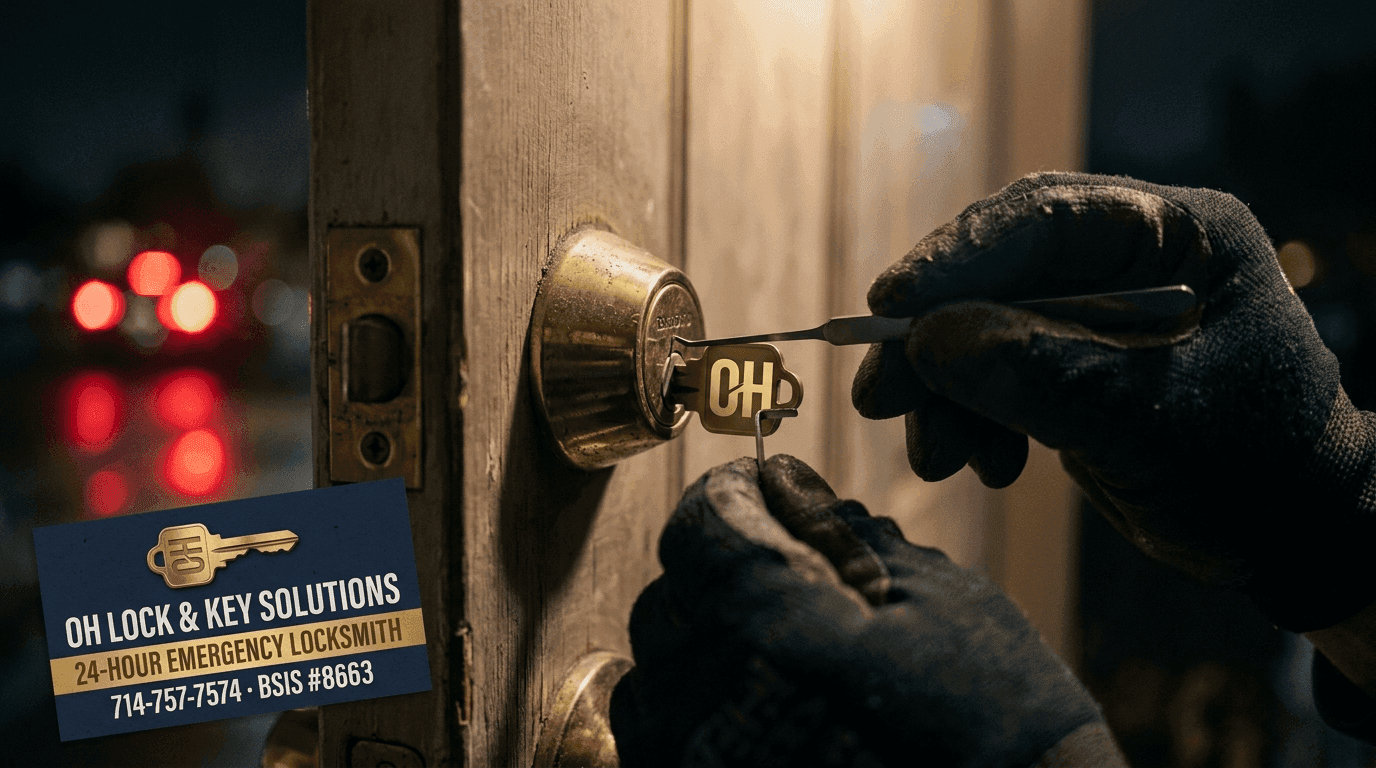
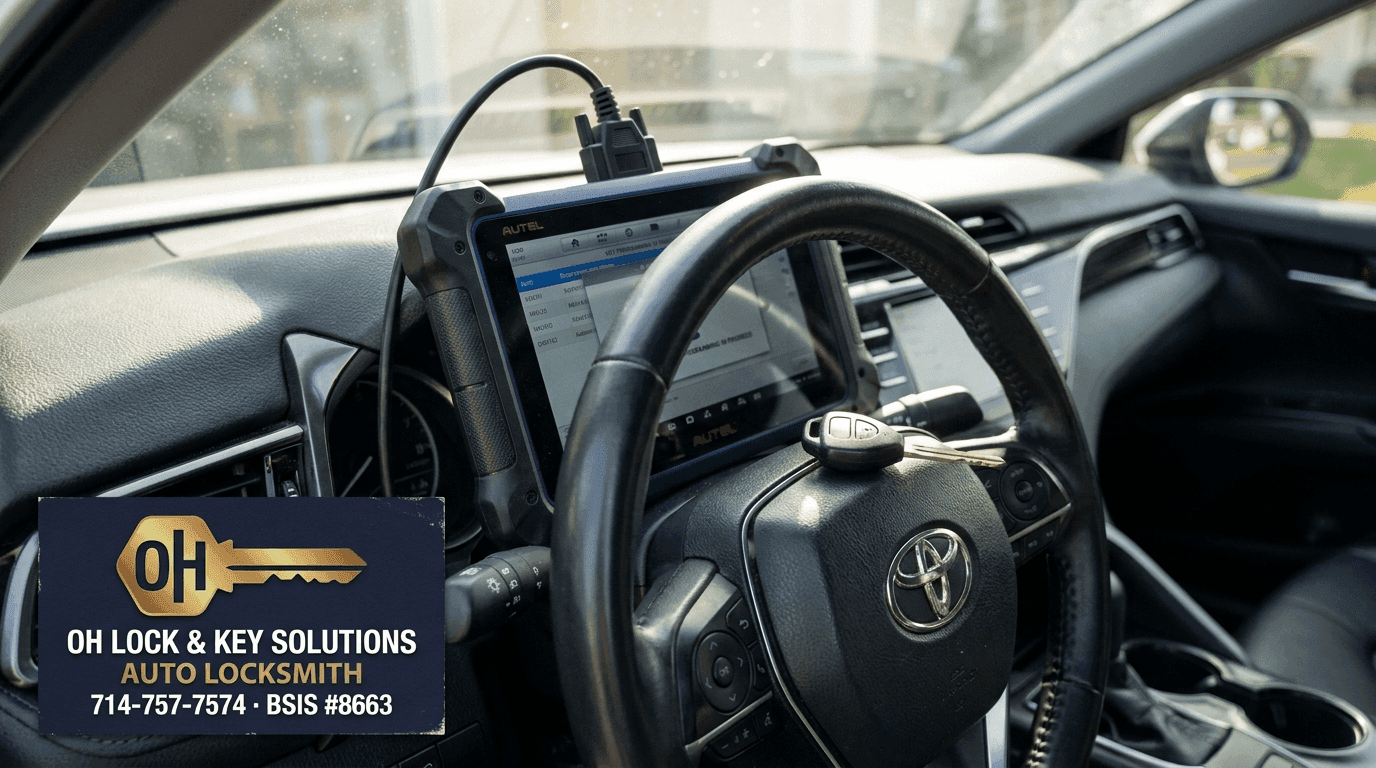
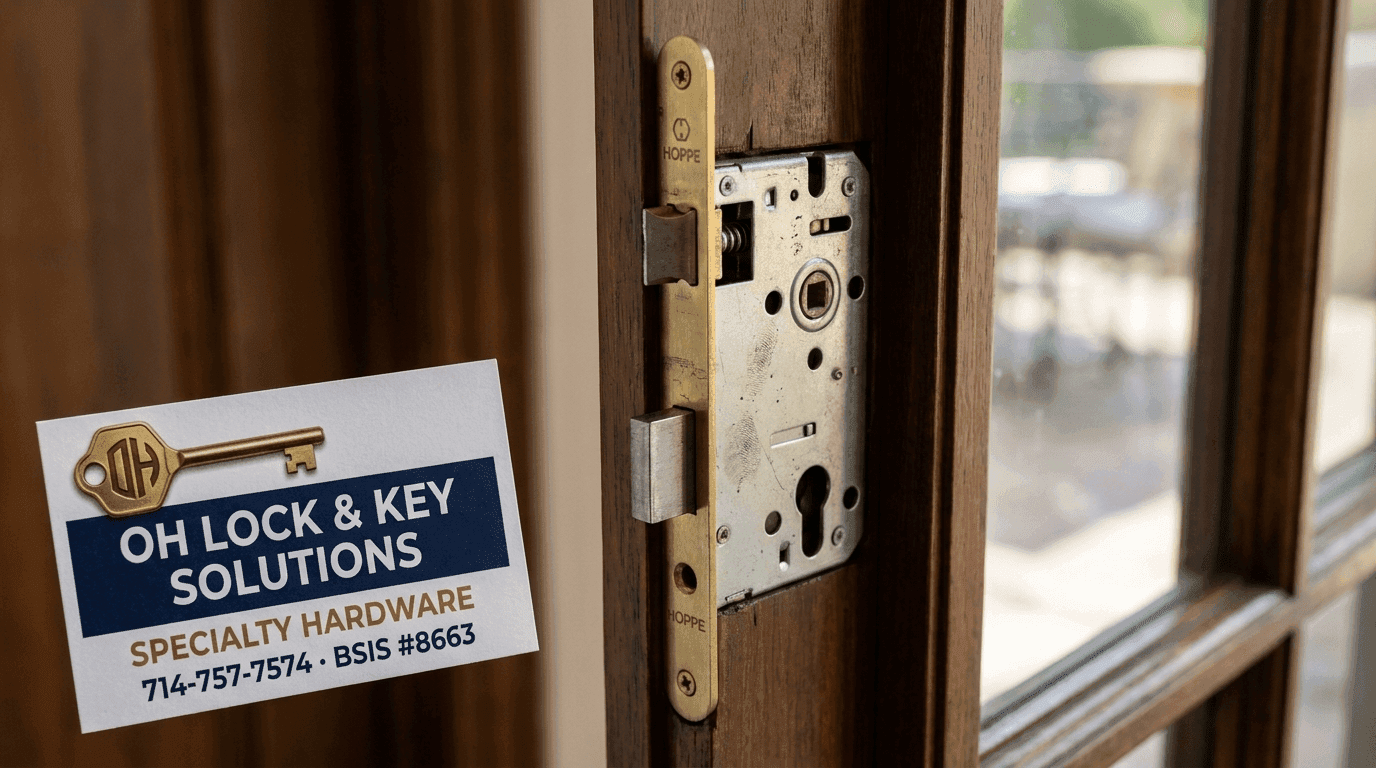
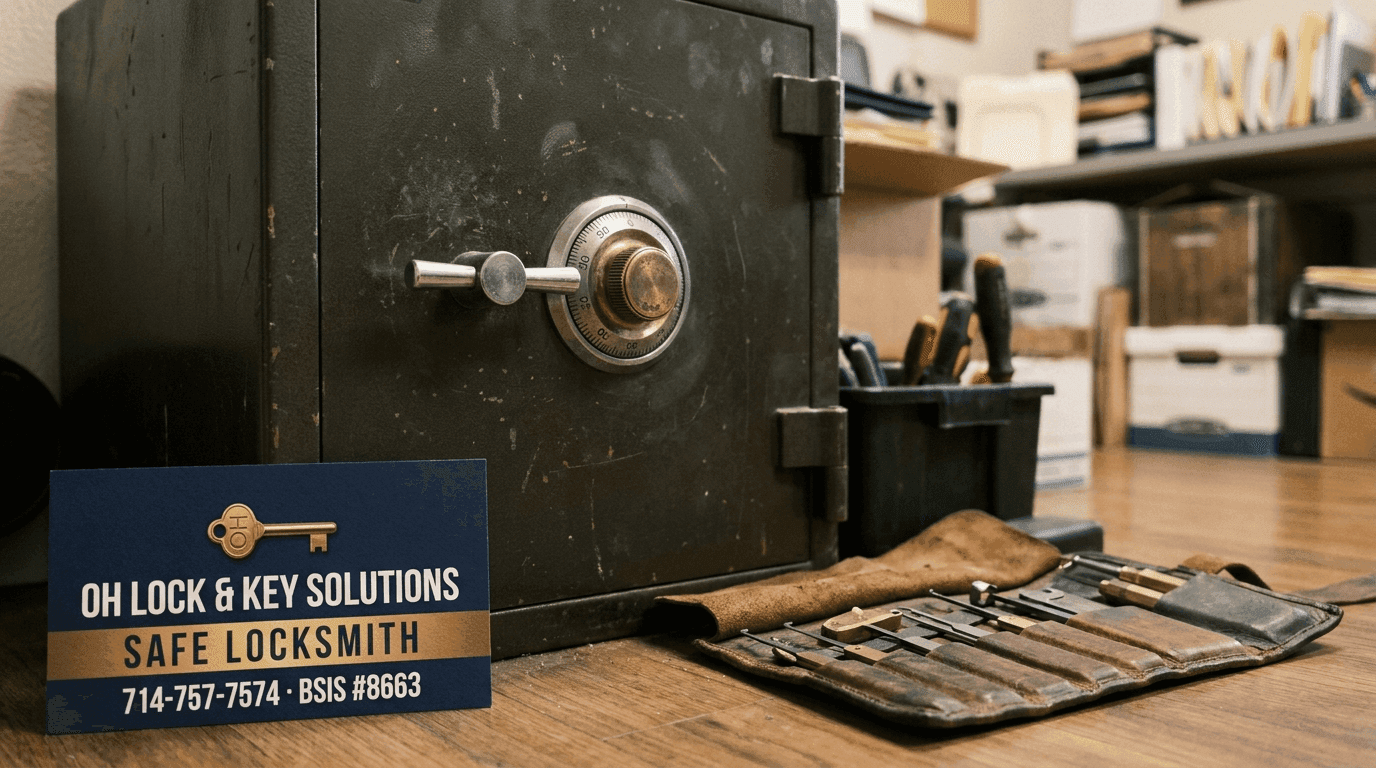
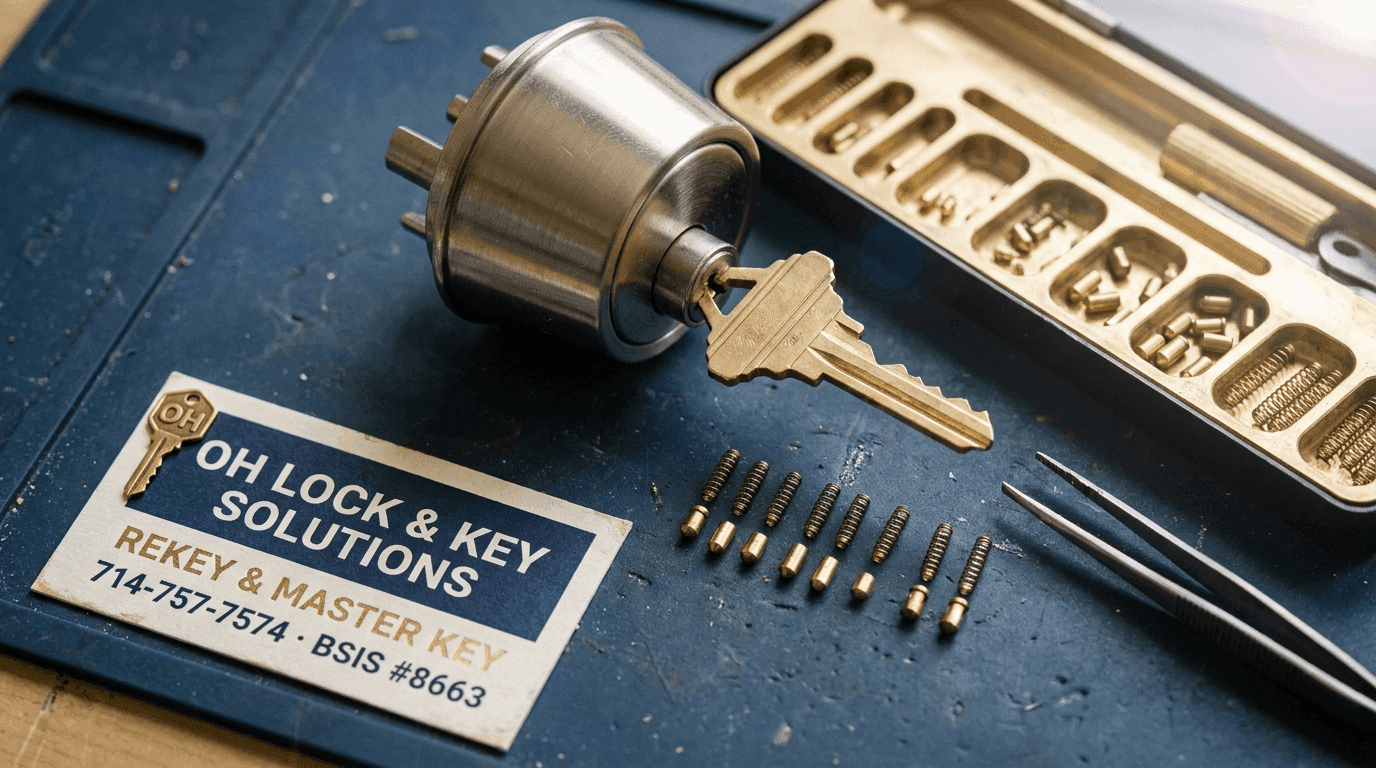
Our Brand
A real, local locksmith — not a call-center middleman.
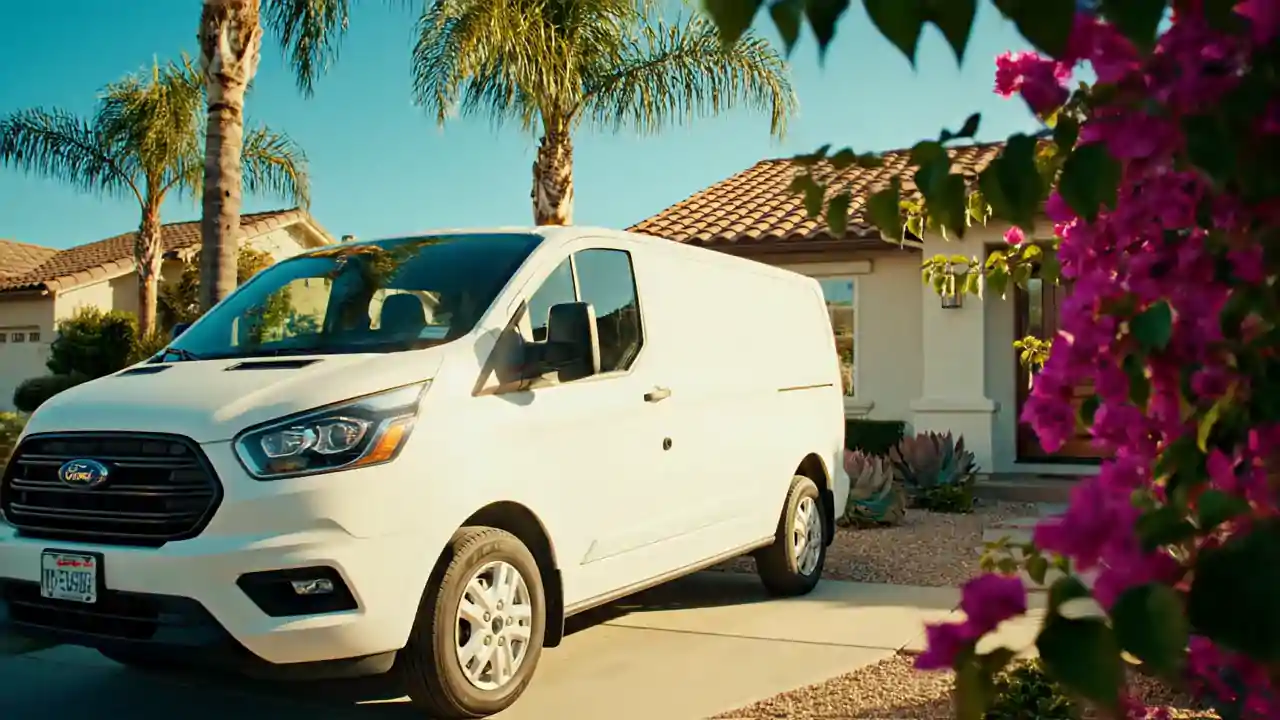
Branded vans, a real Santa Ana office, and a BSIS-licensed crew you can actually meet.
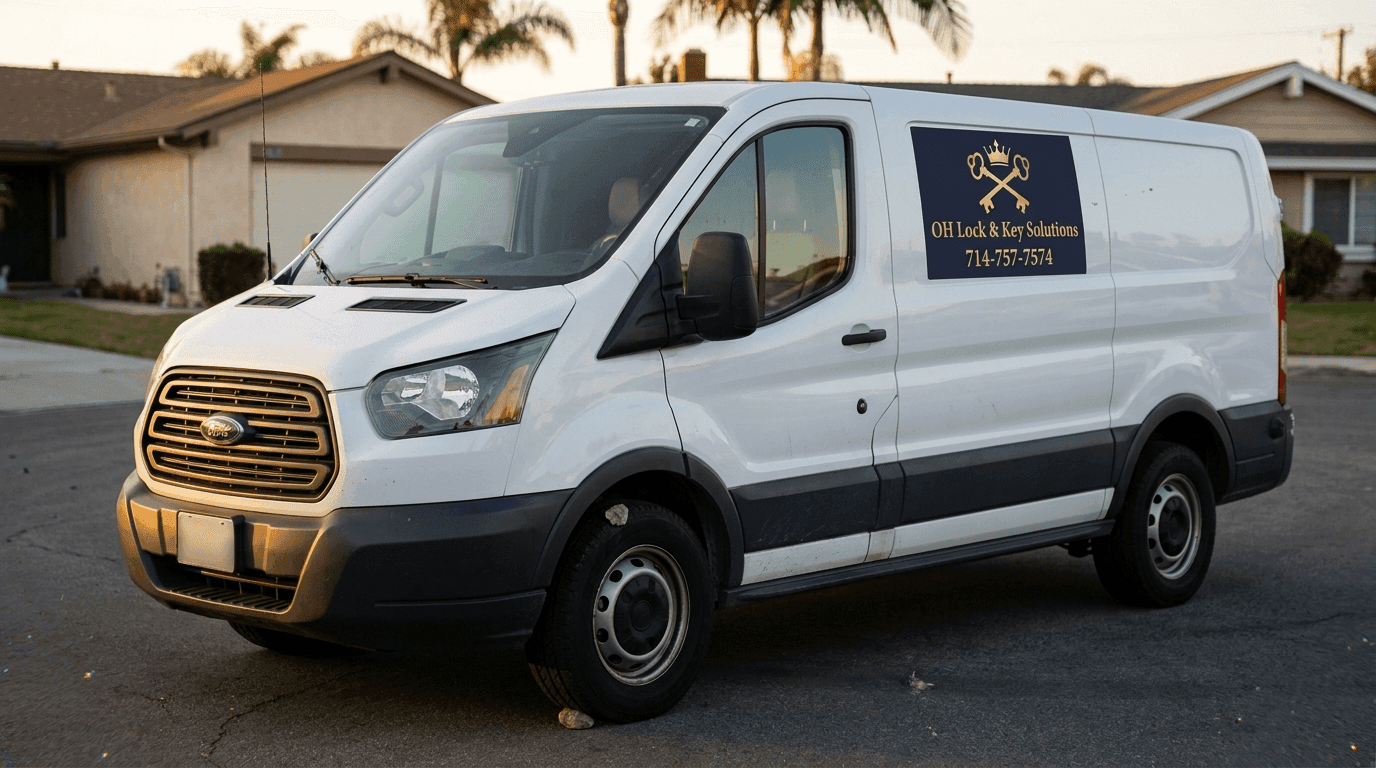
Branded mobile locksmith — dispatched across Orange County.
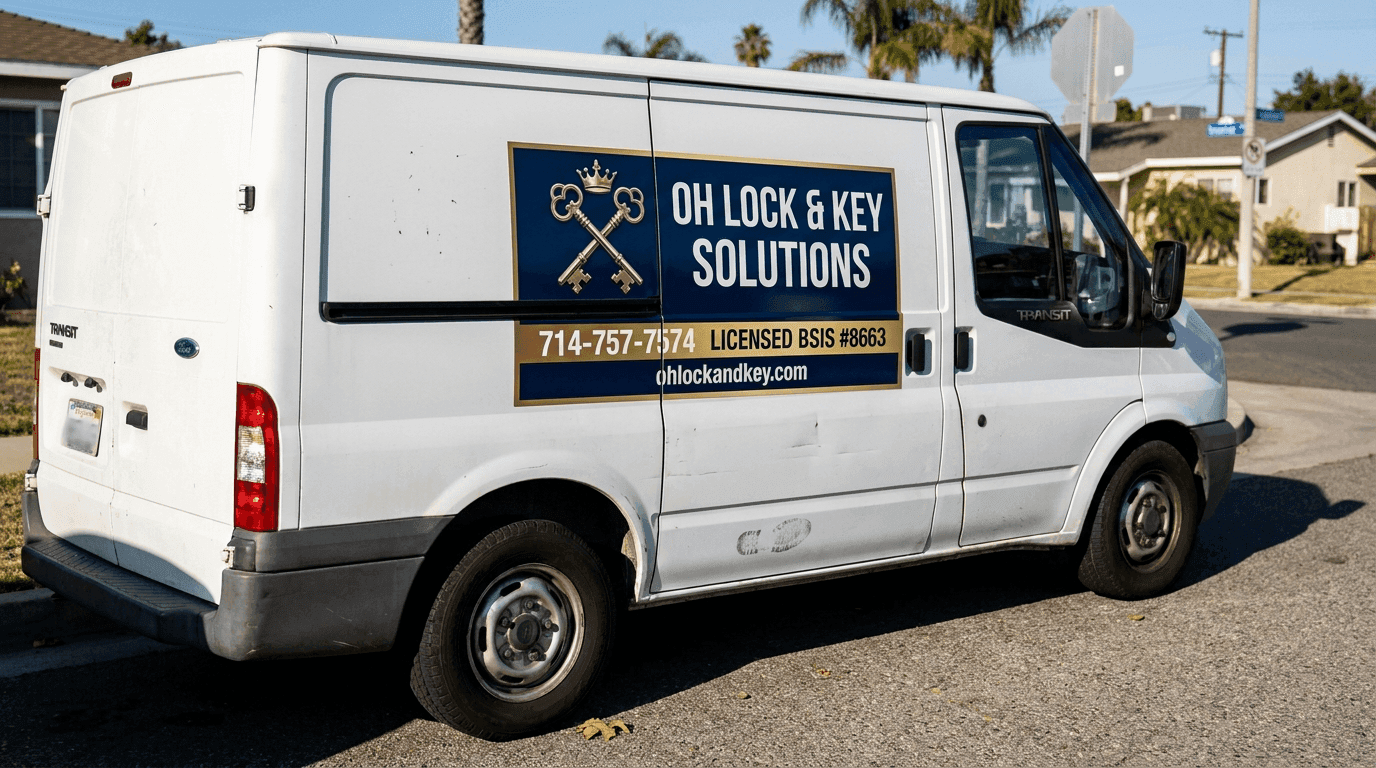
Real jobs
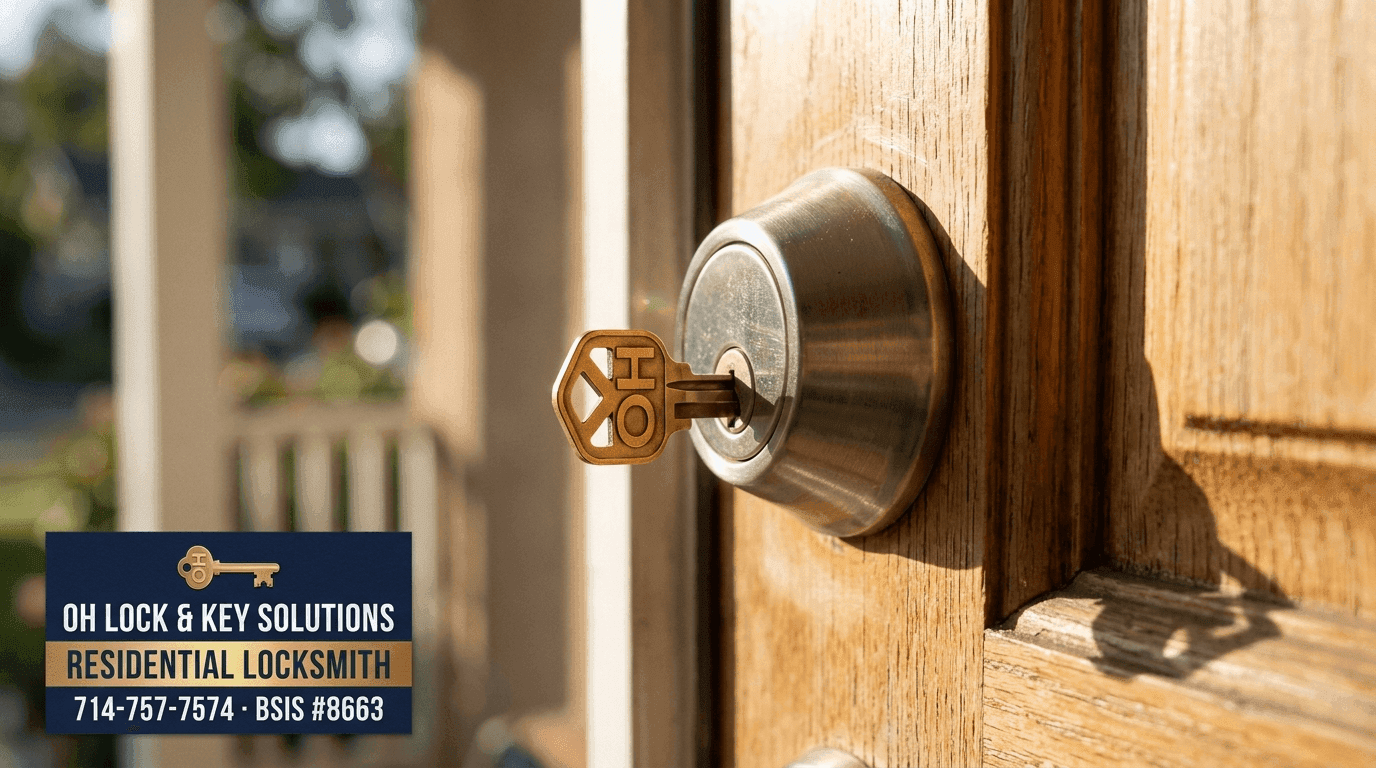
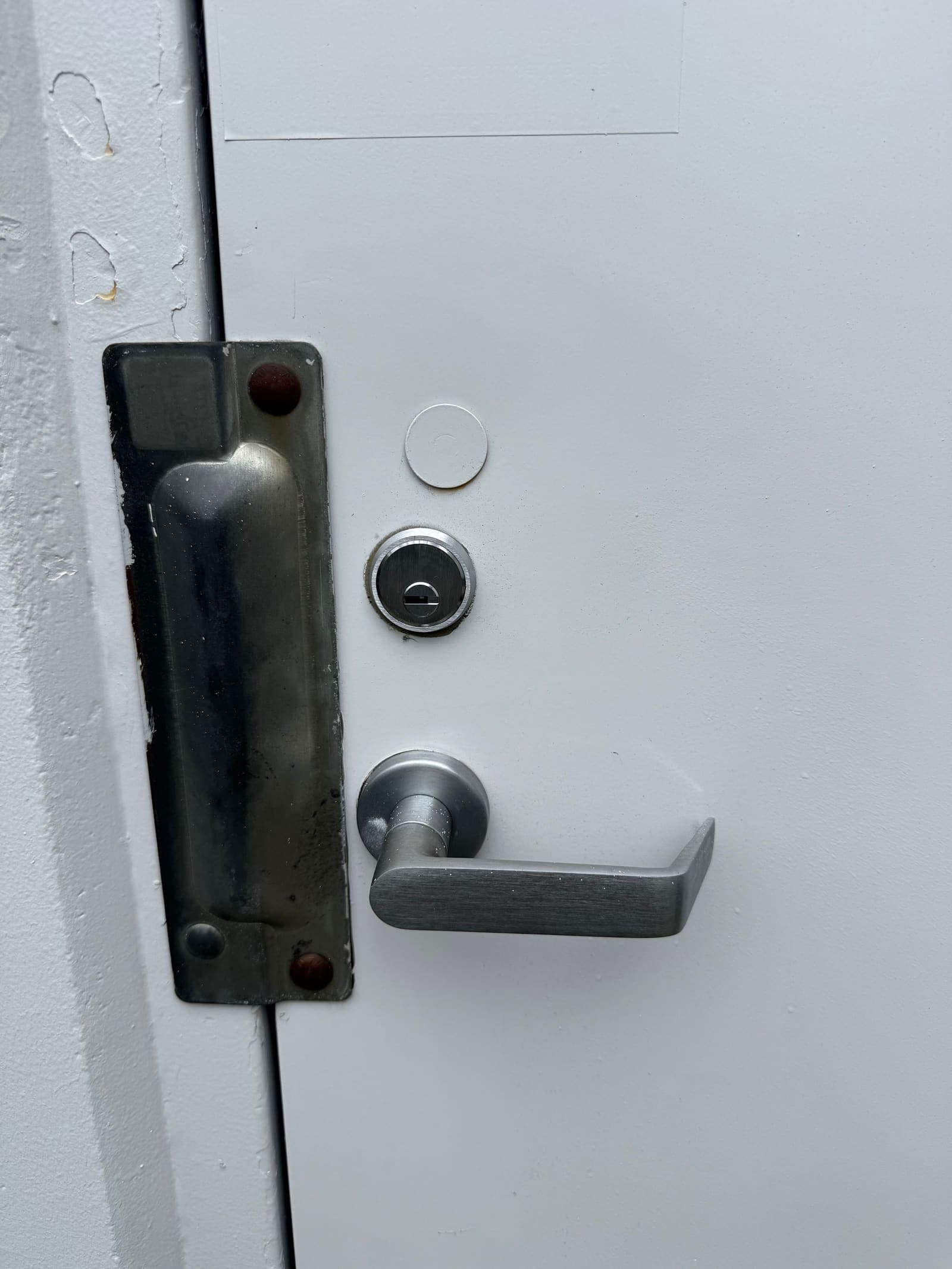
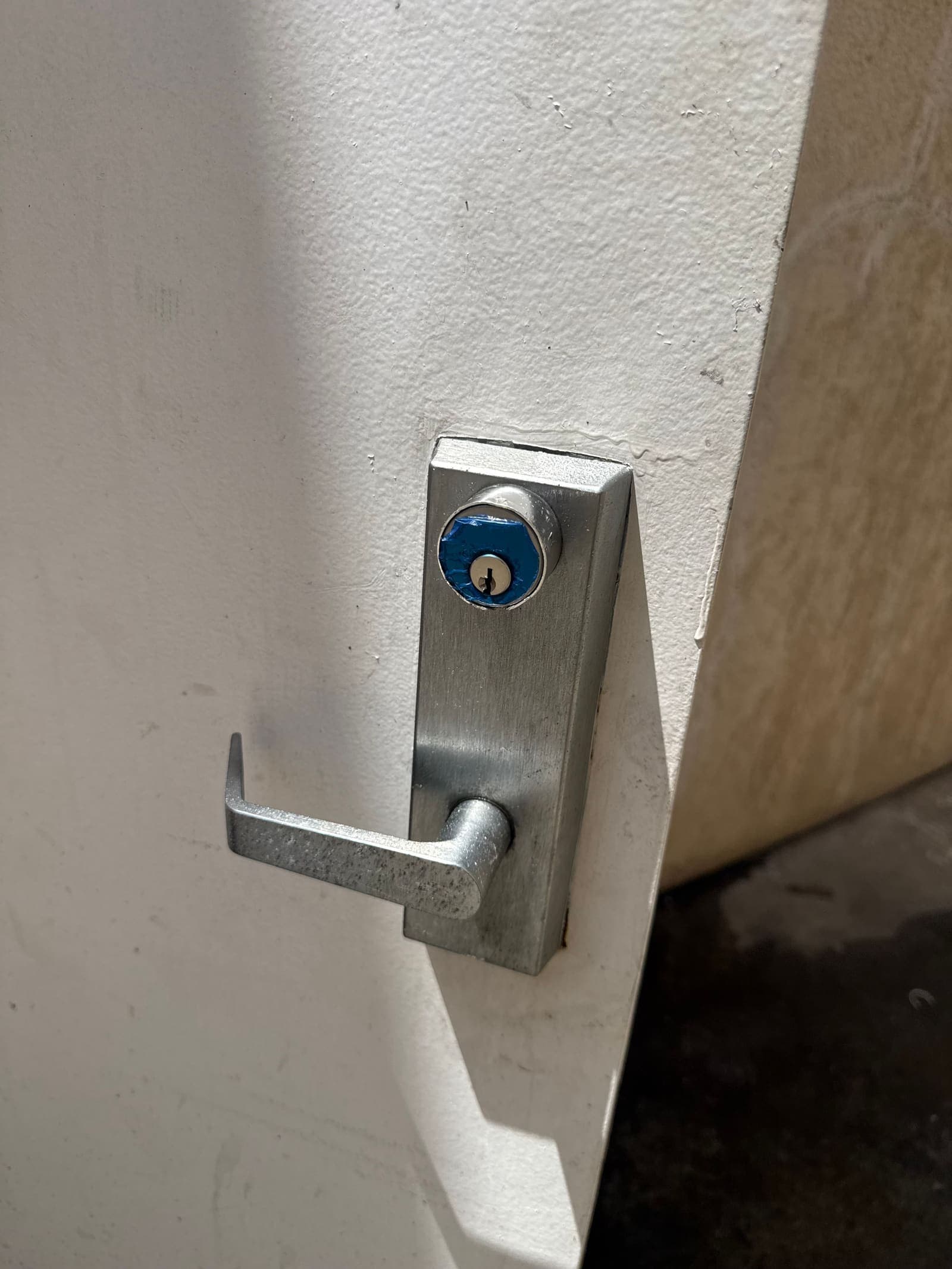
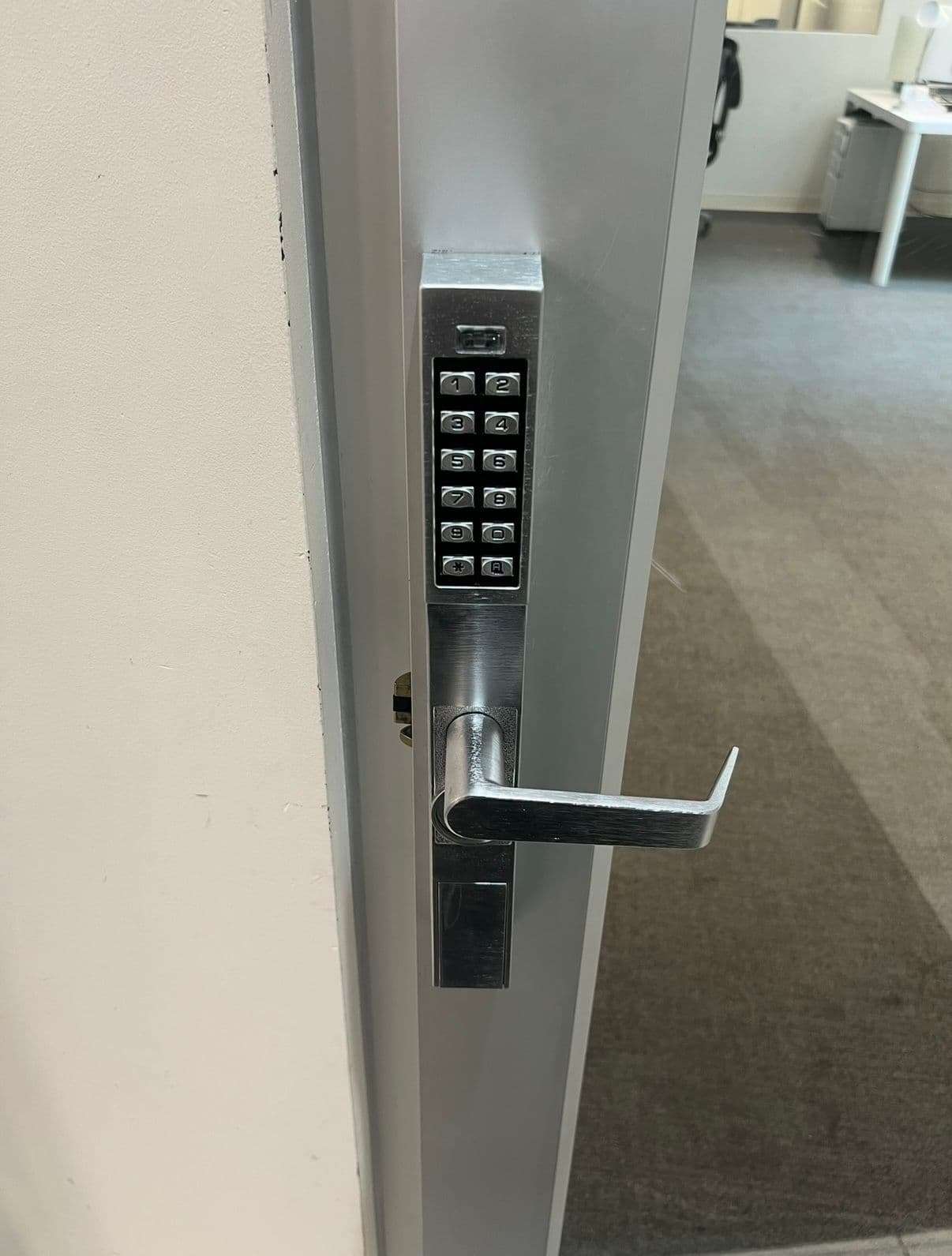
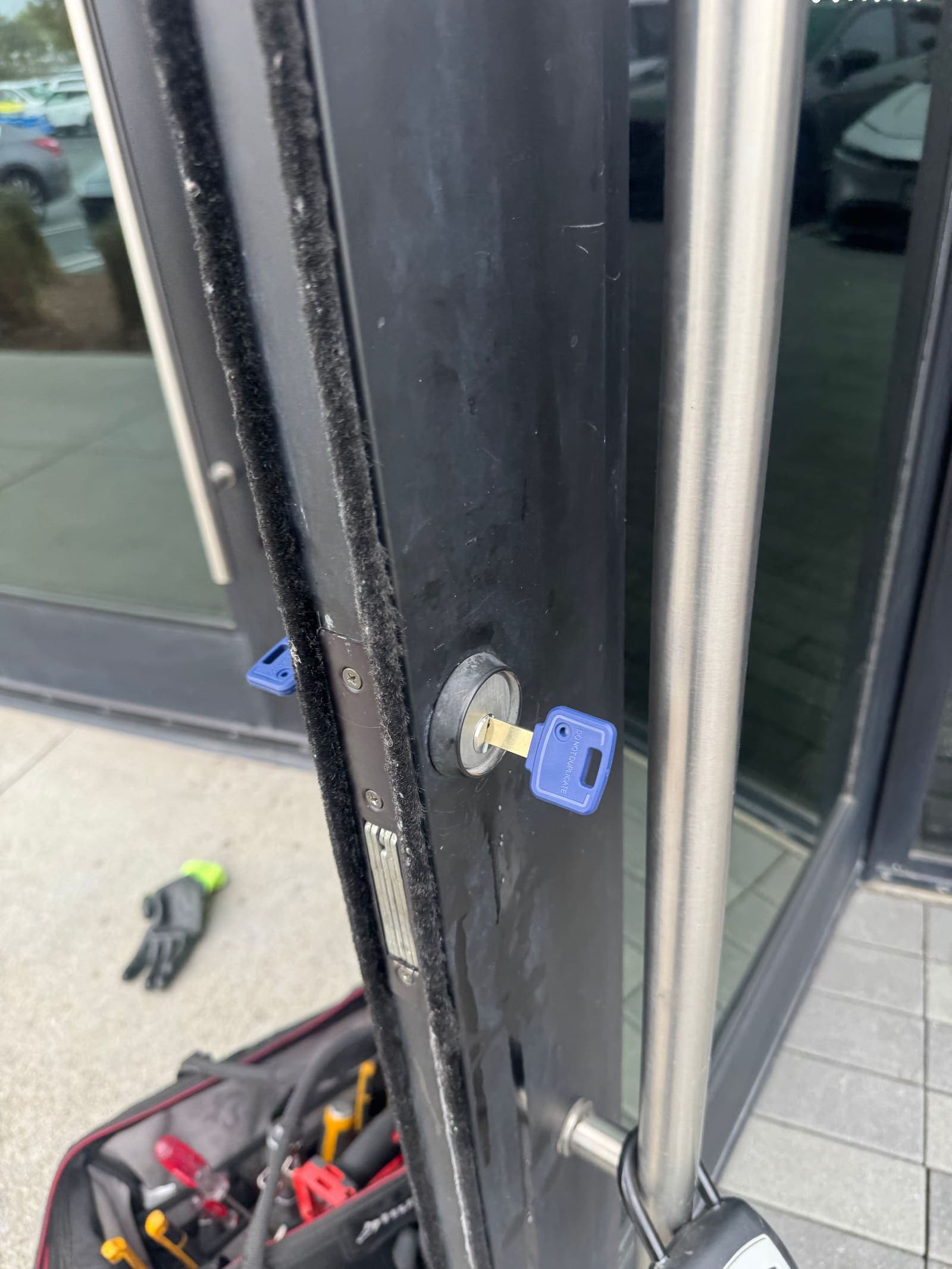
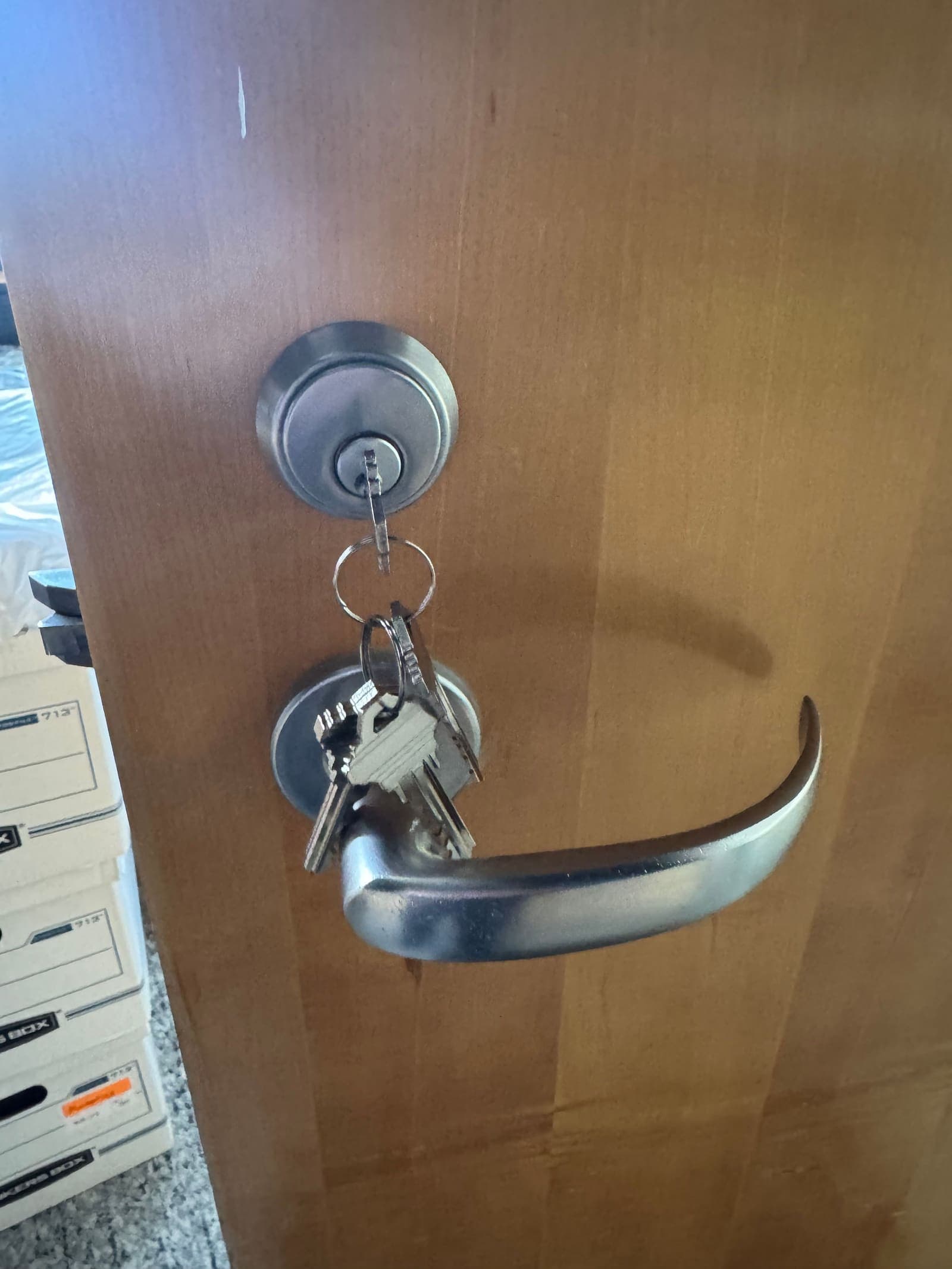
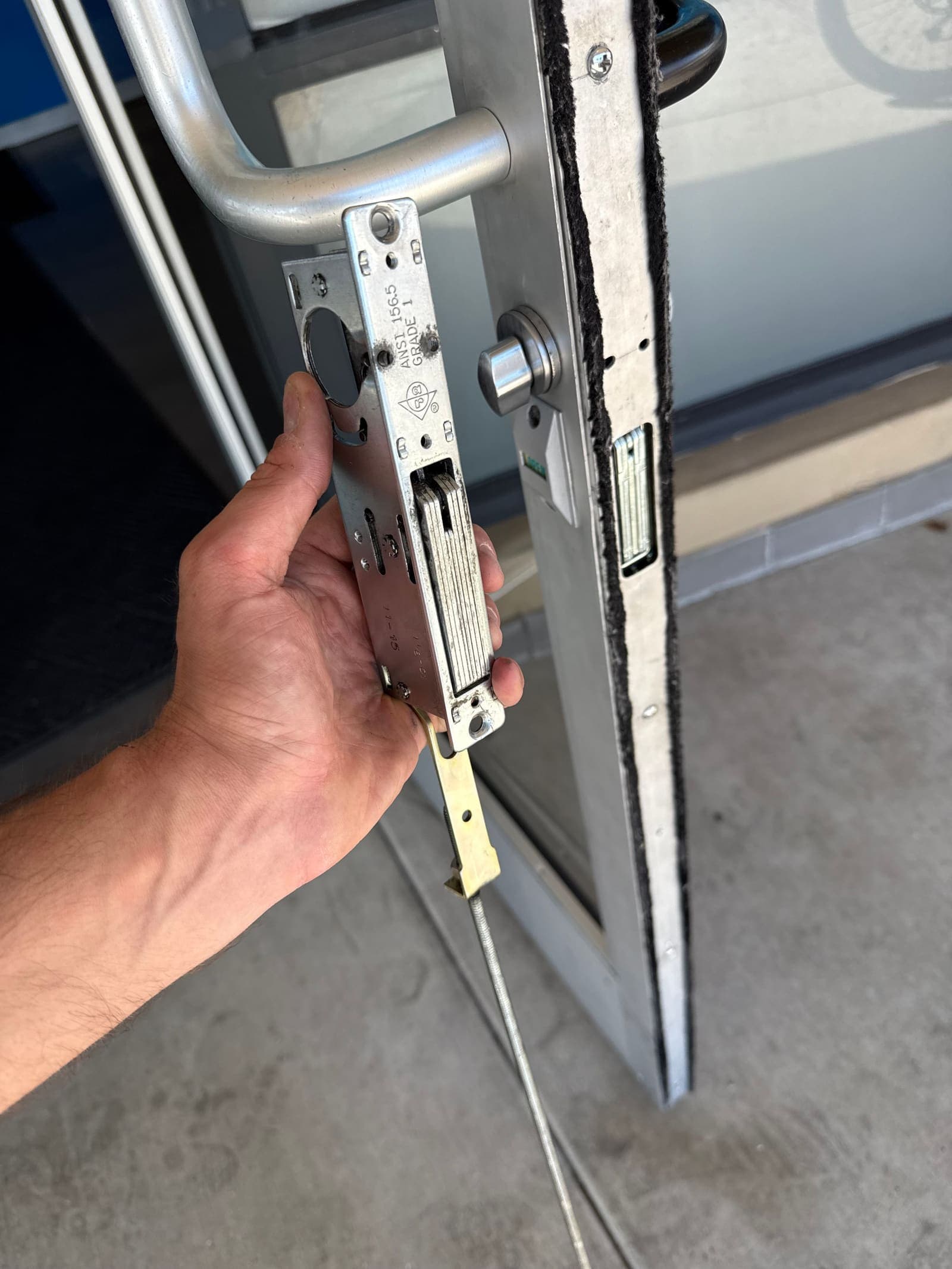
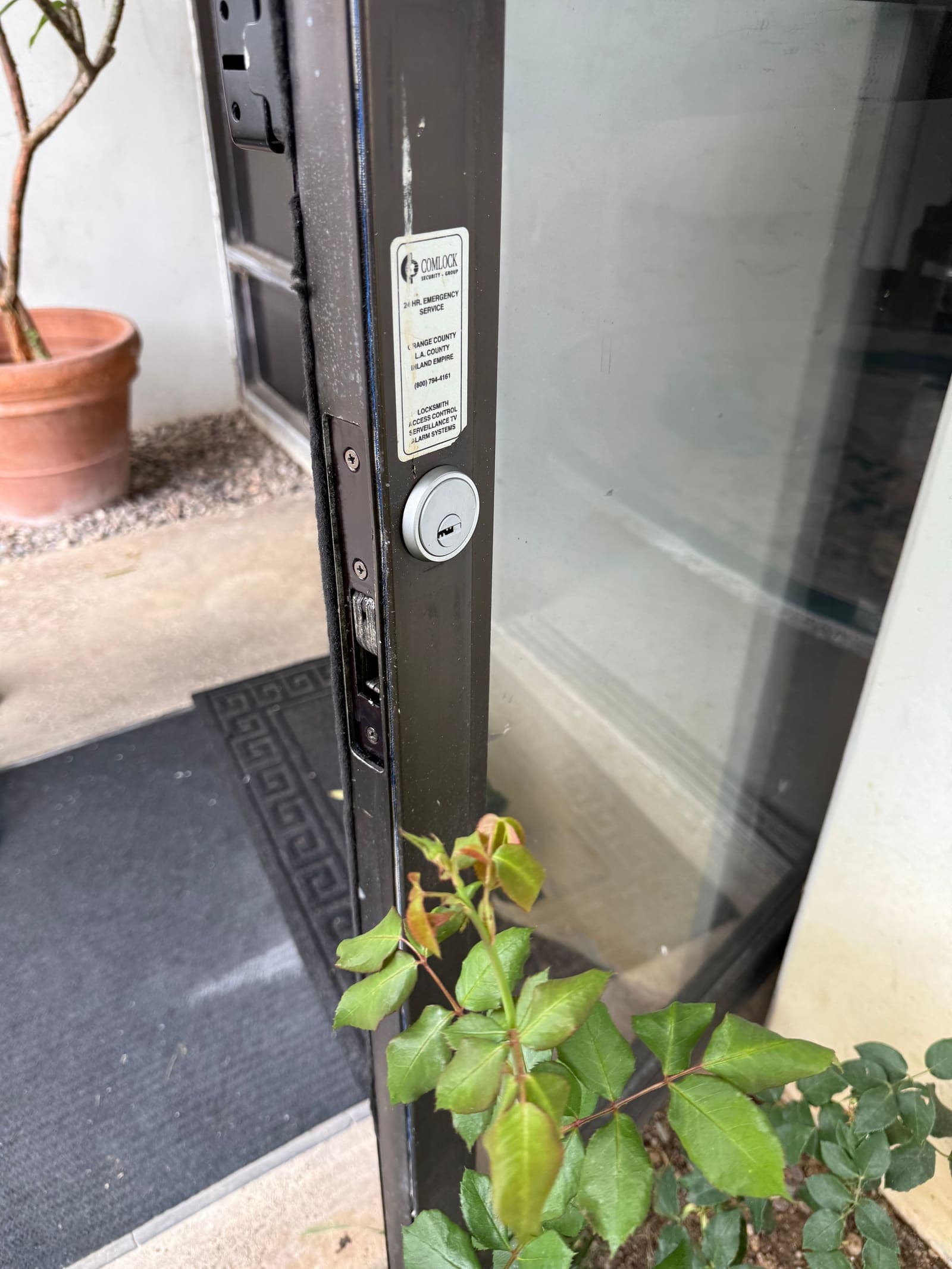
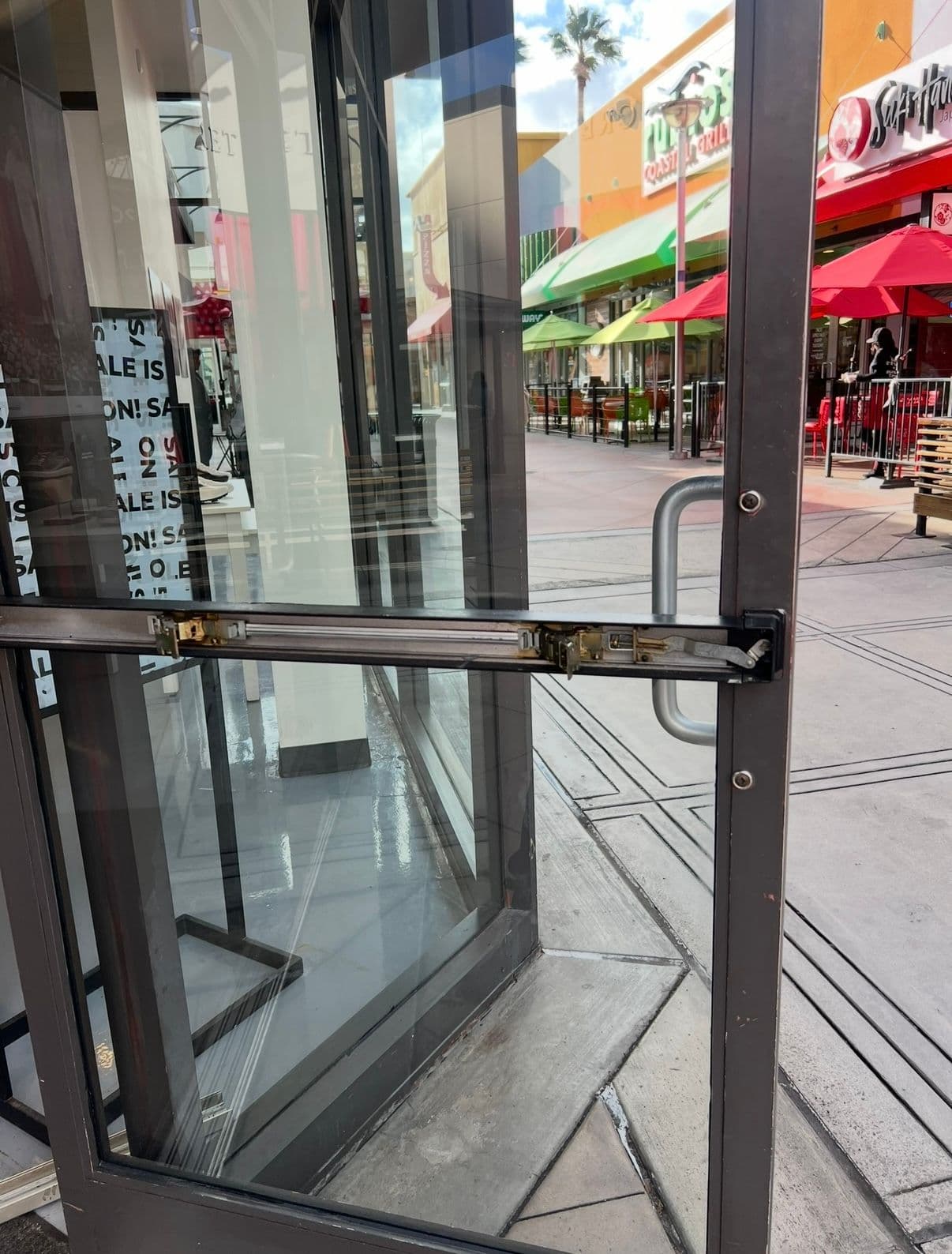
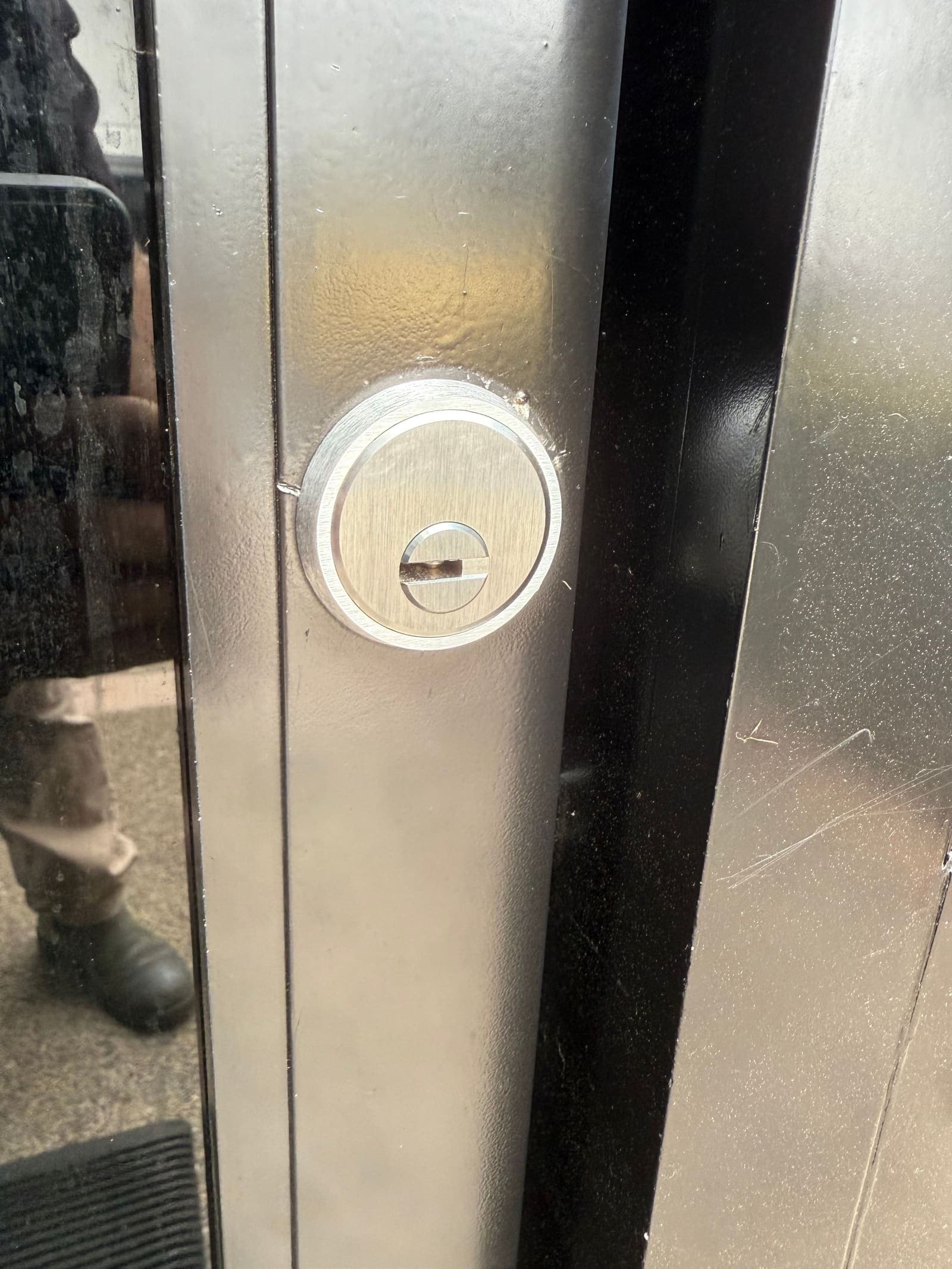
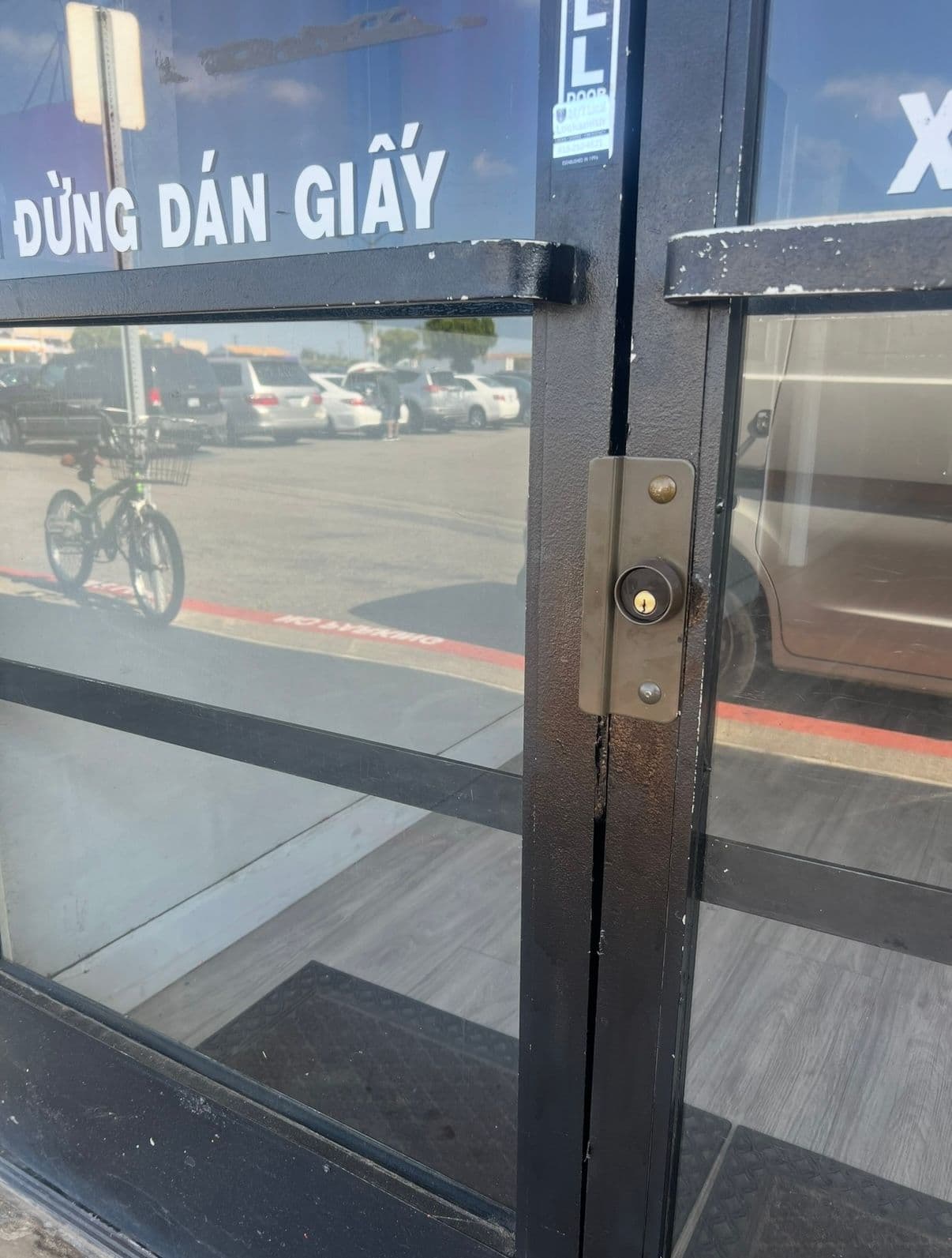
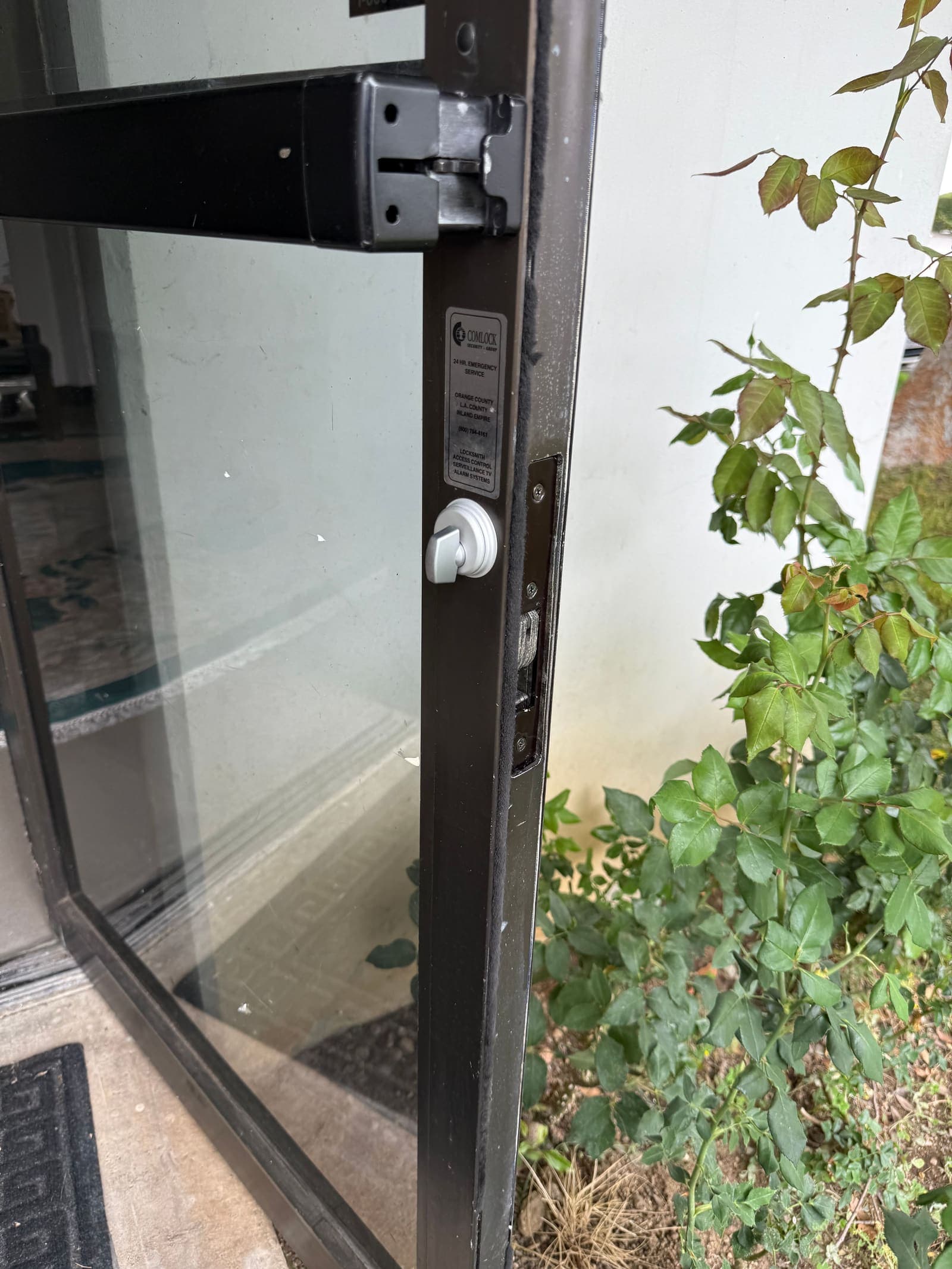
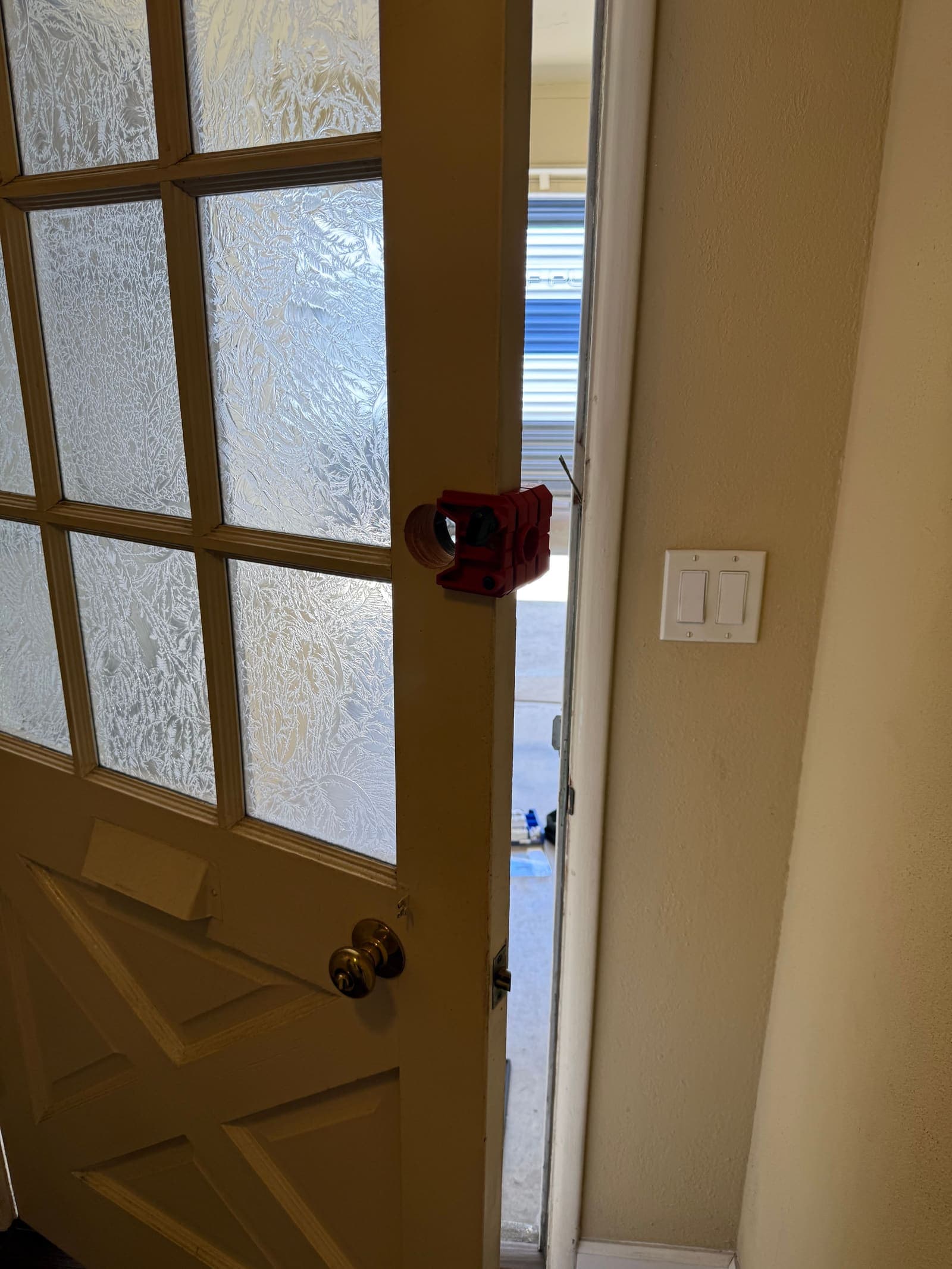
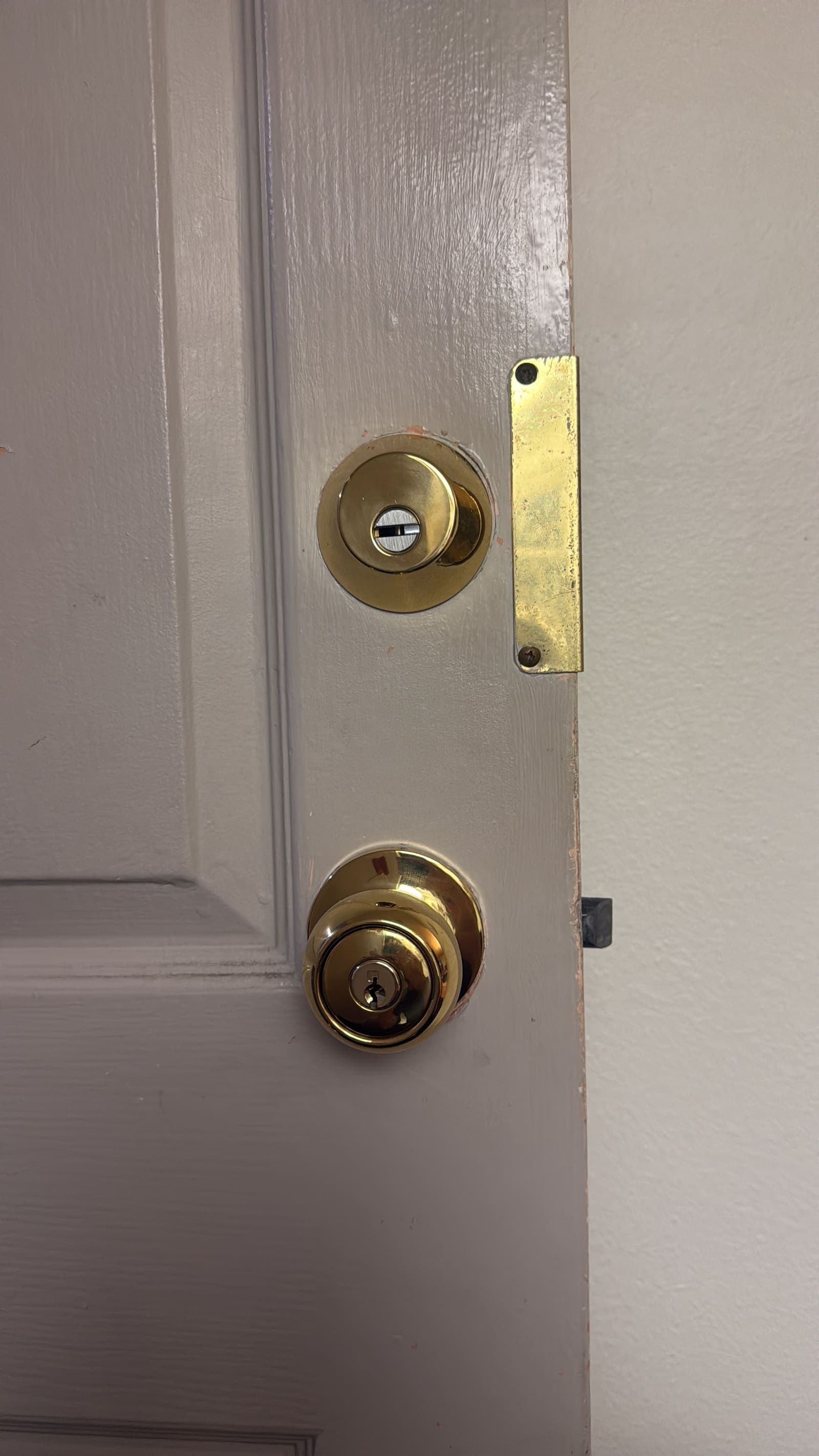
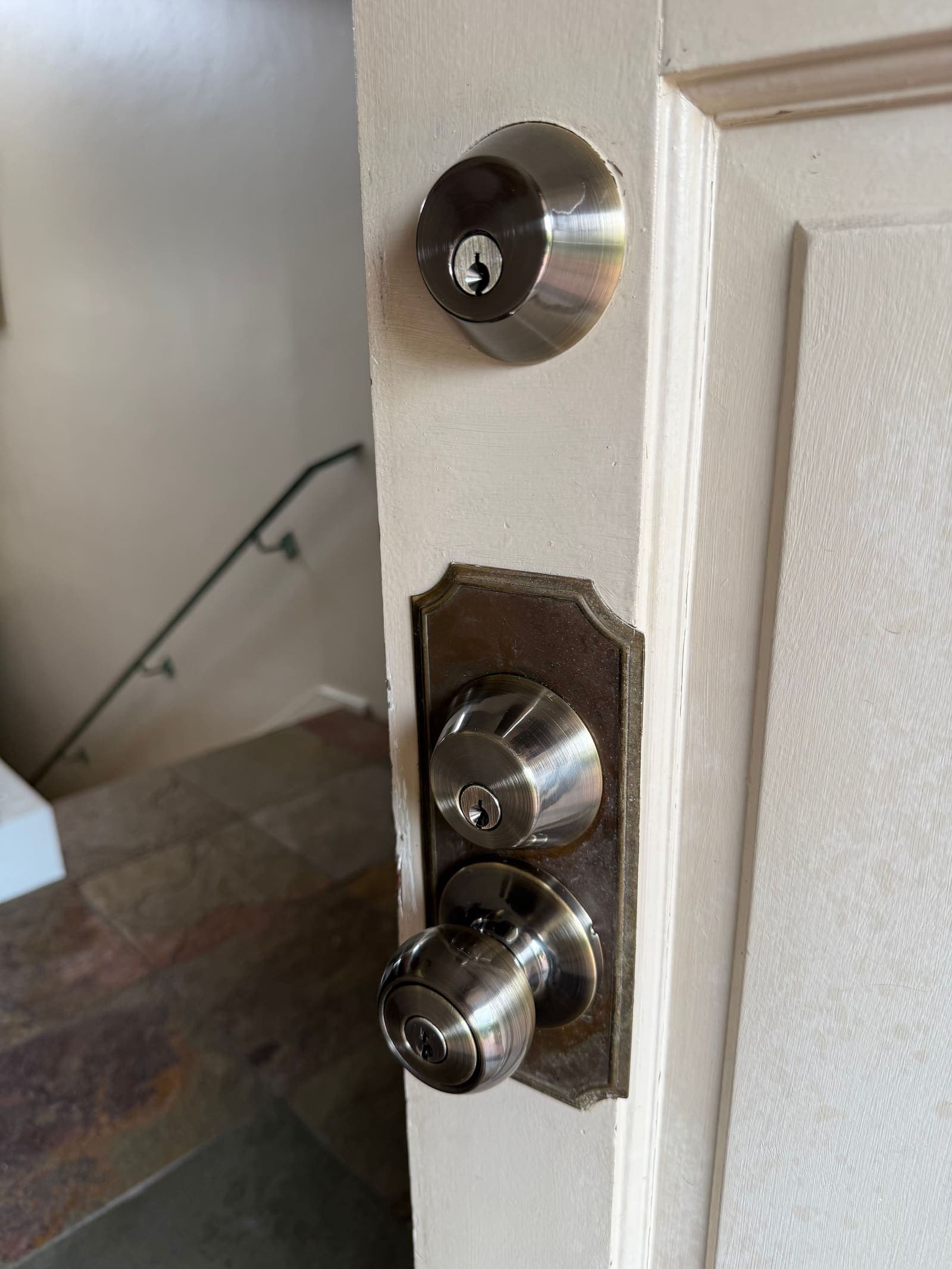
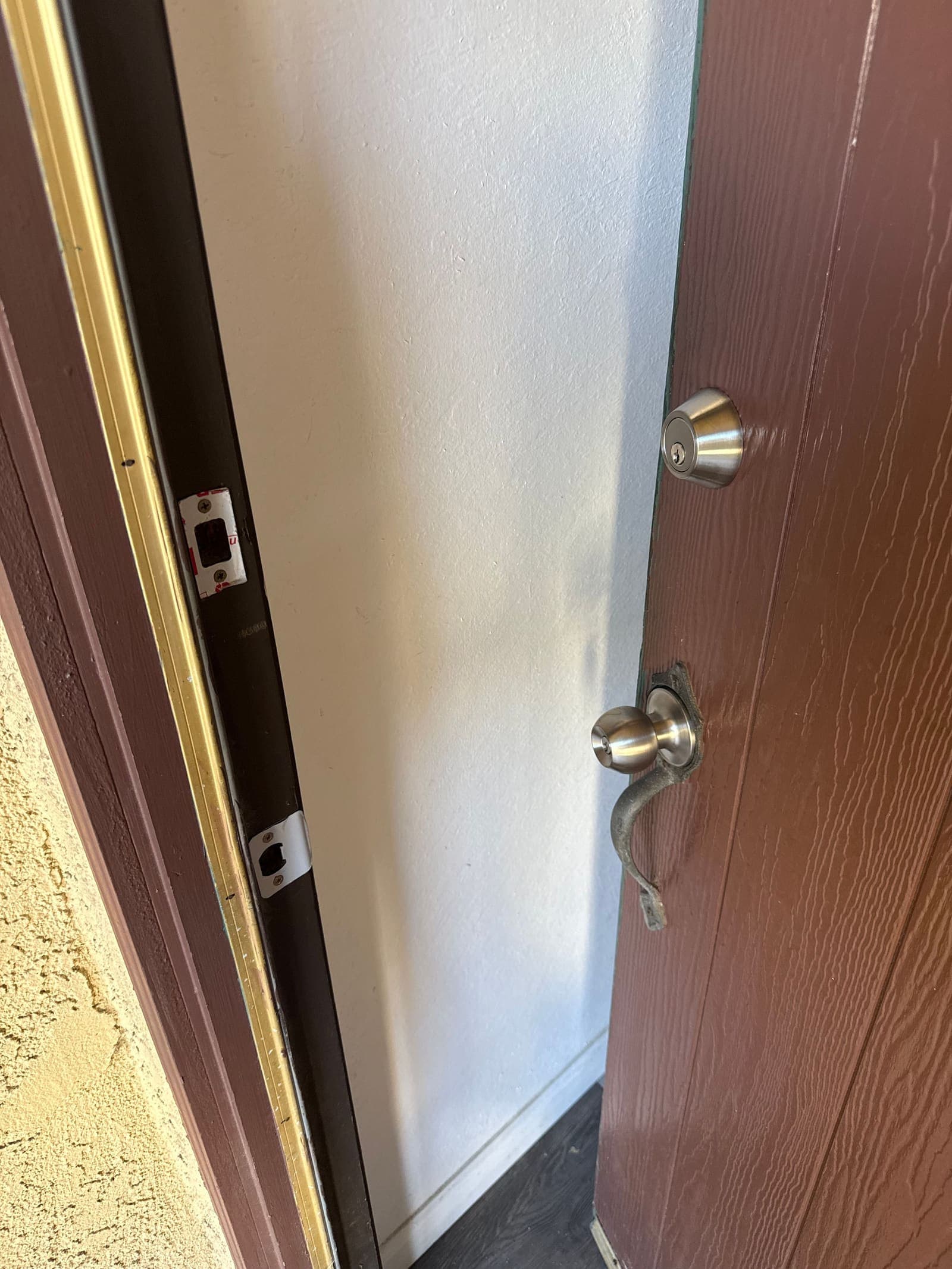
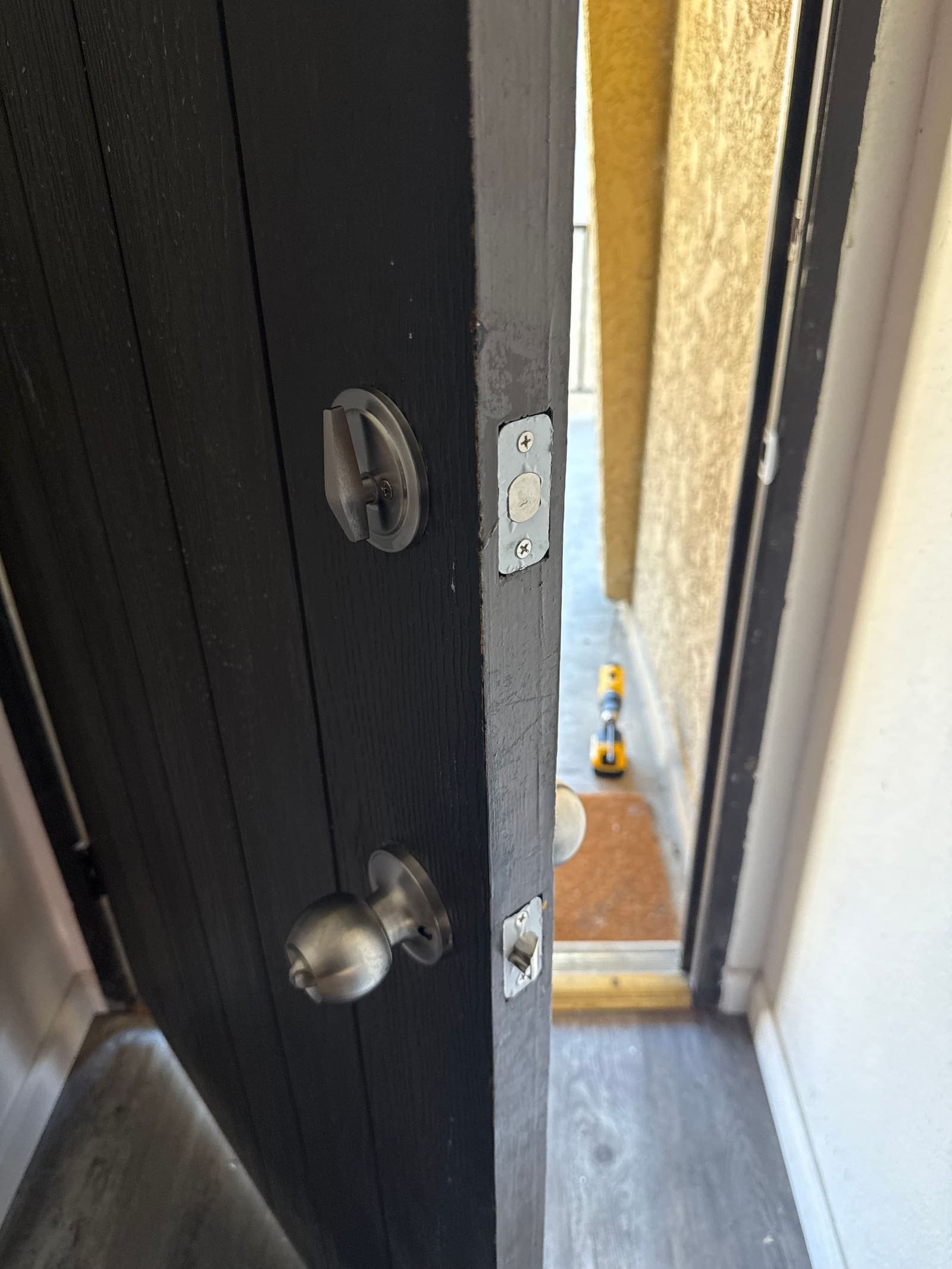
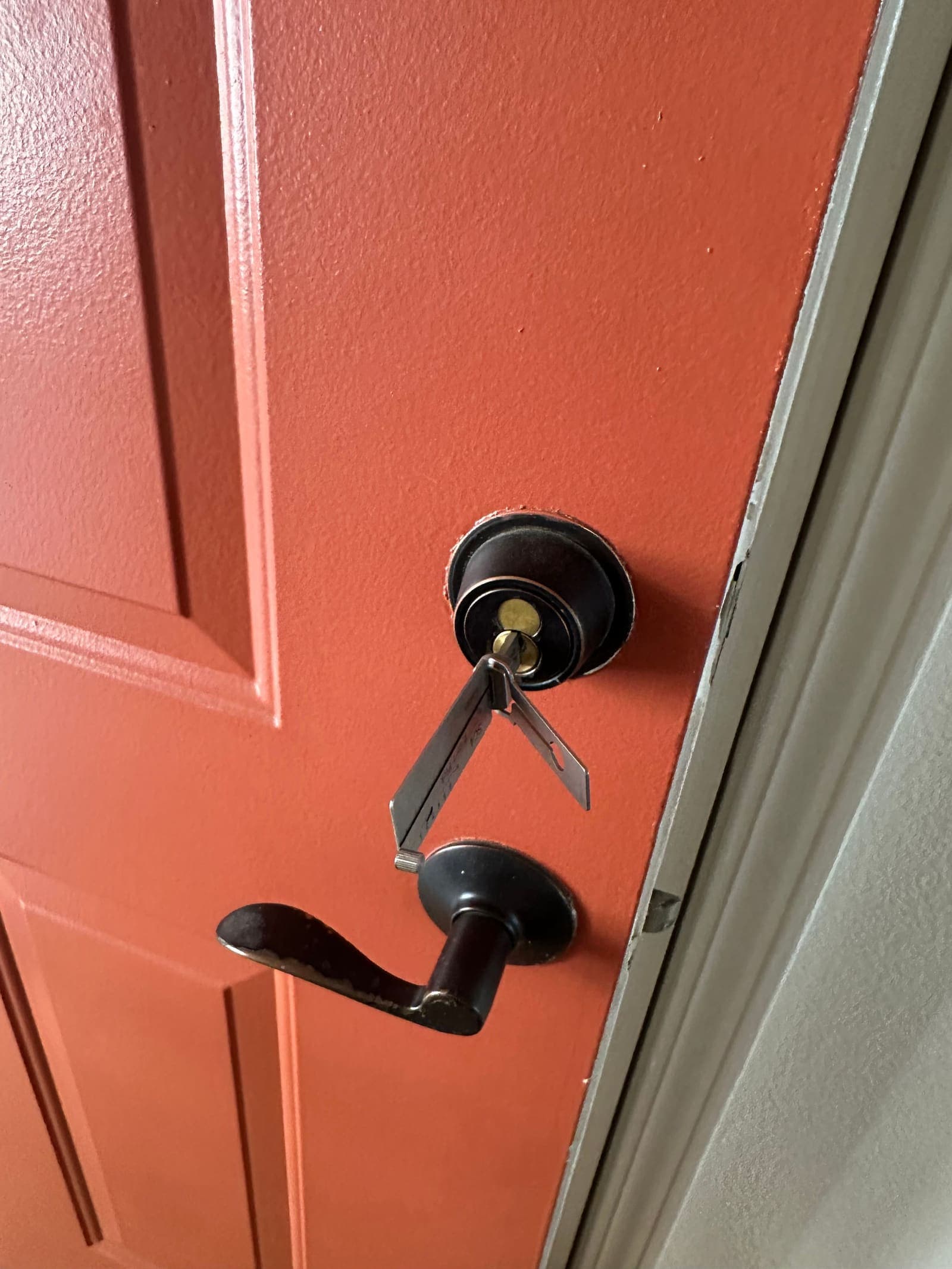
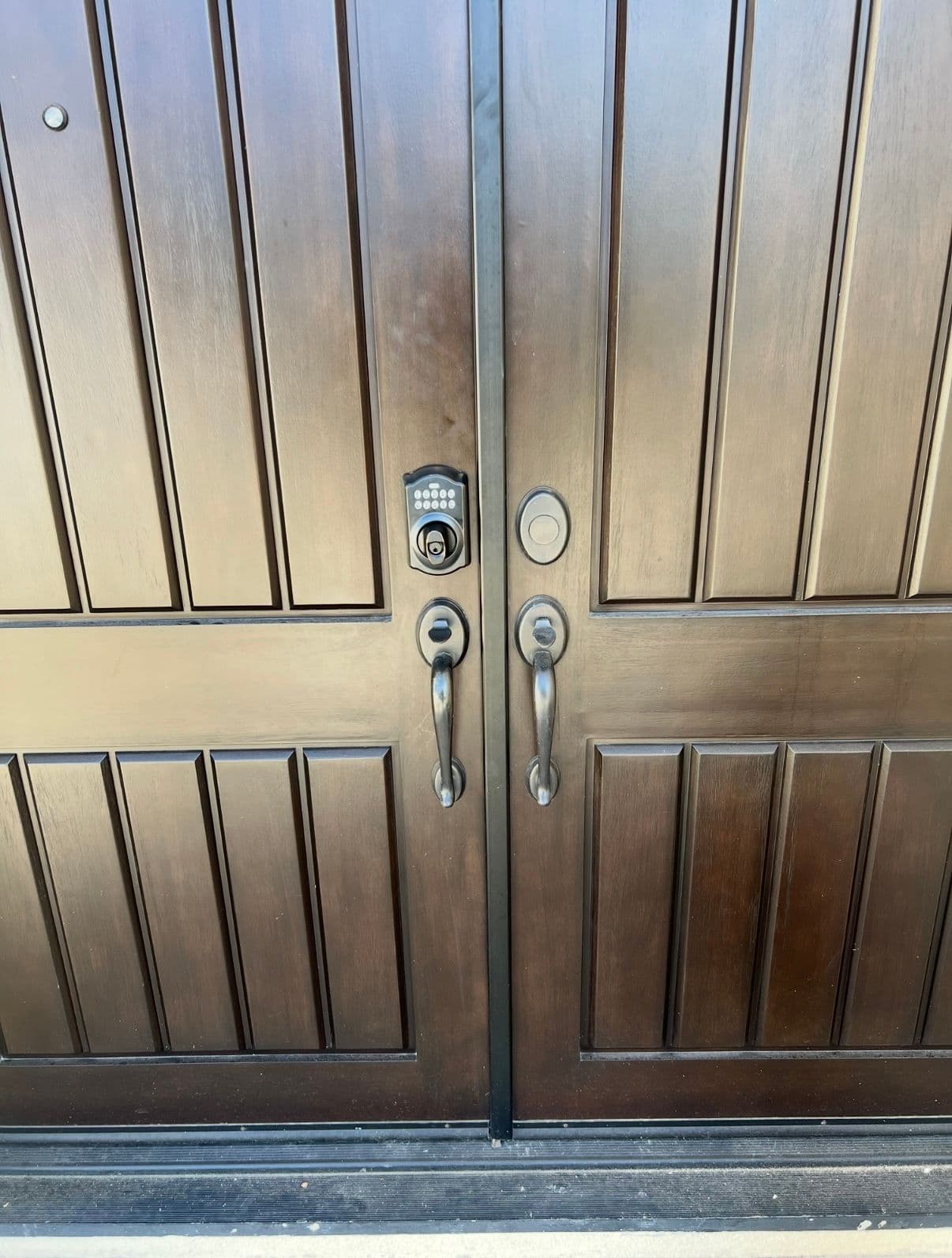
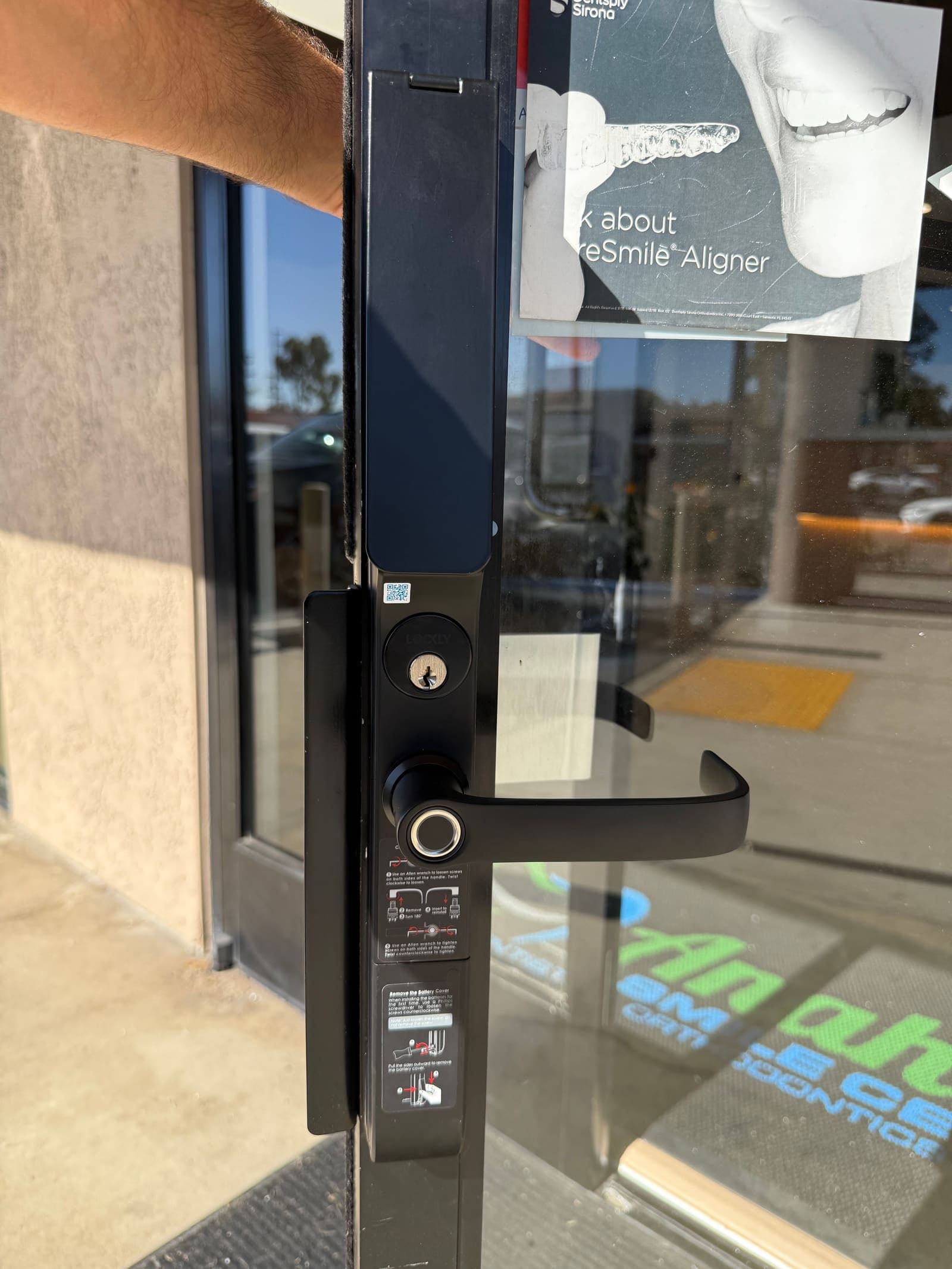
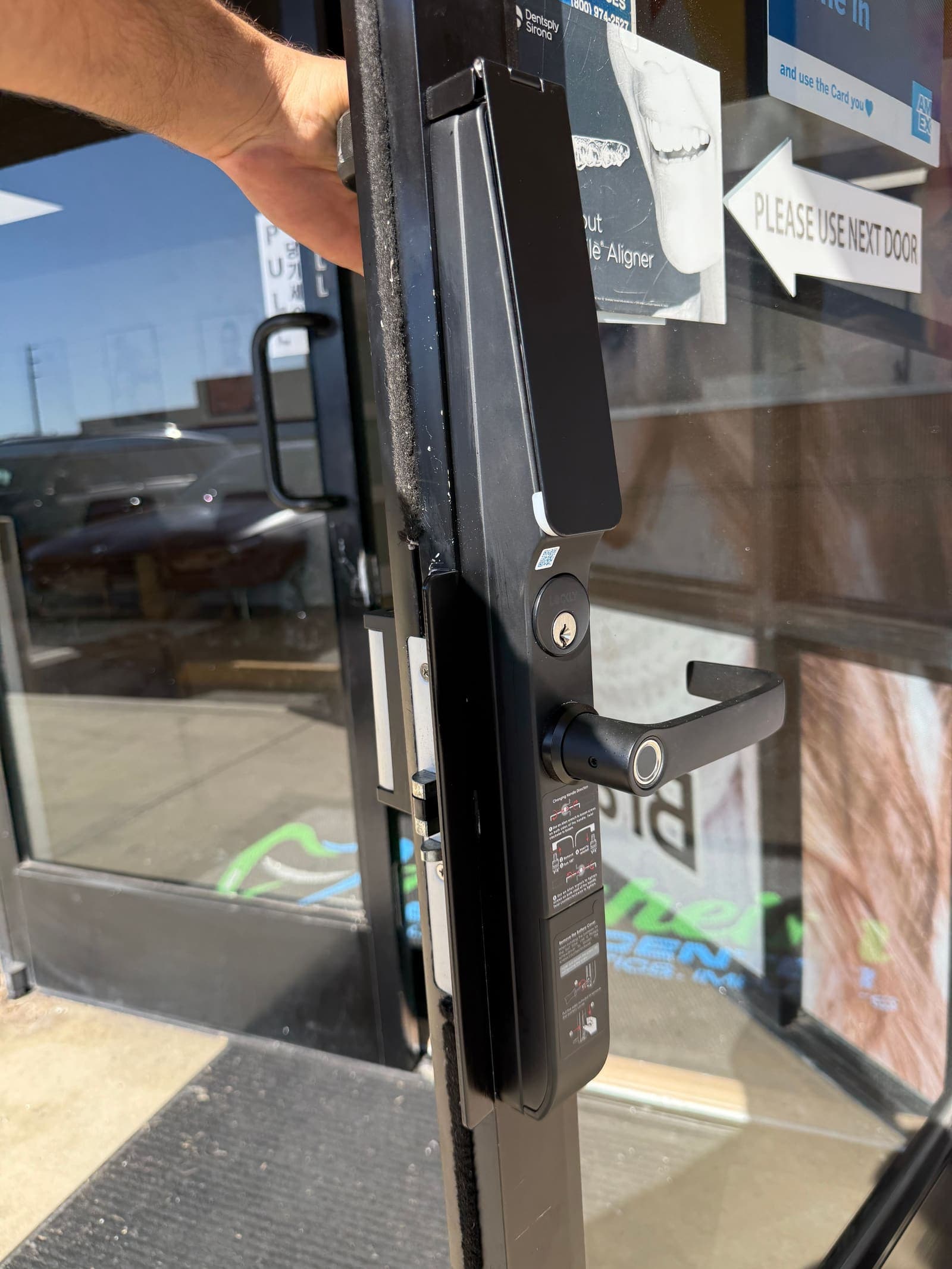
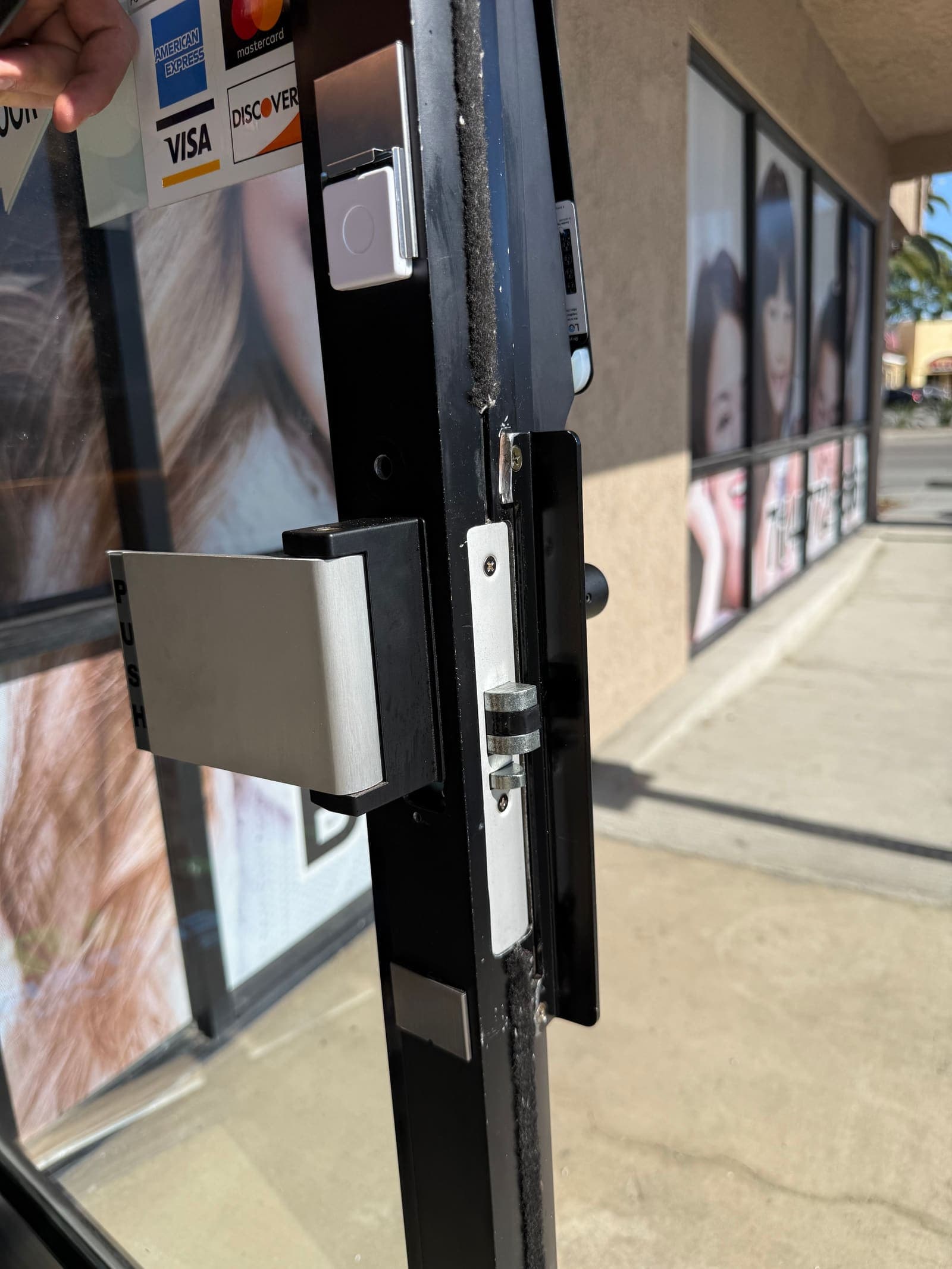
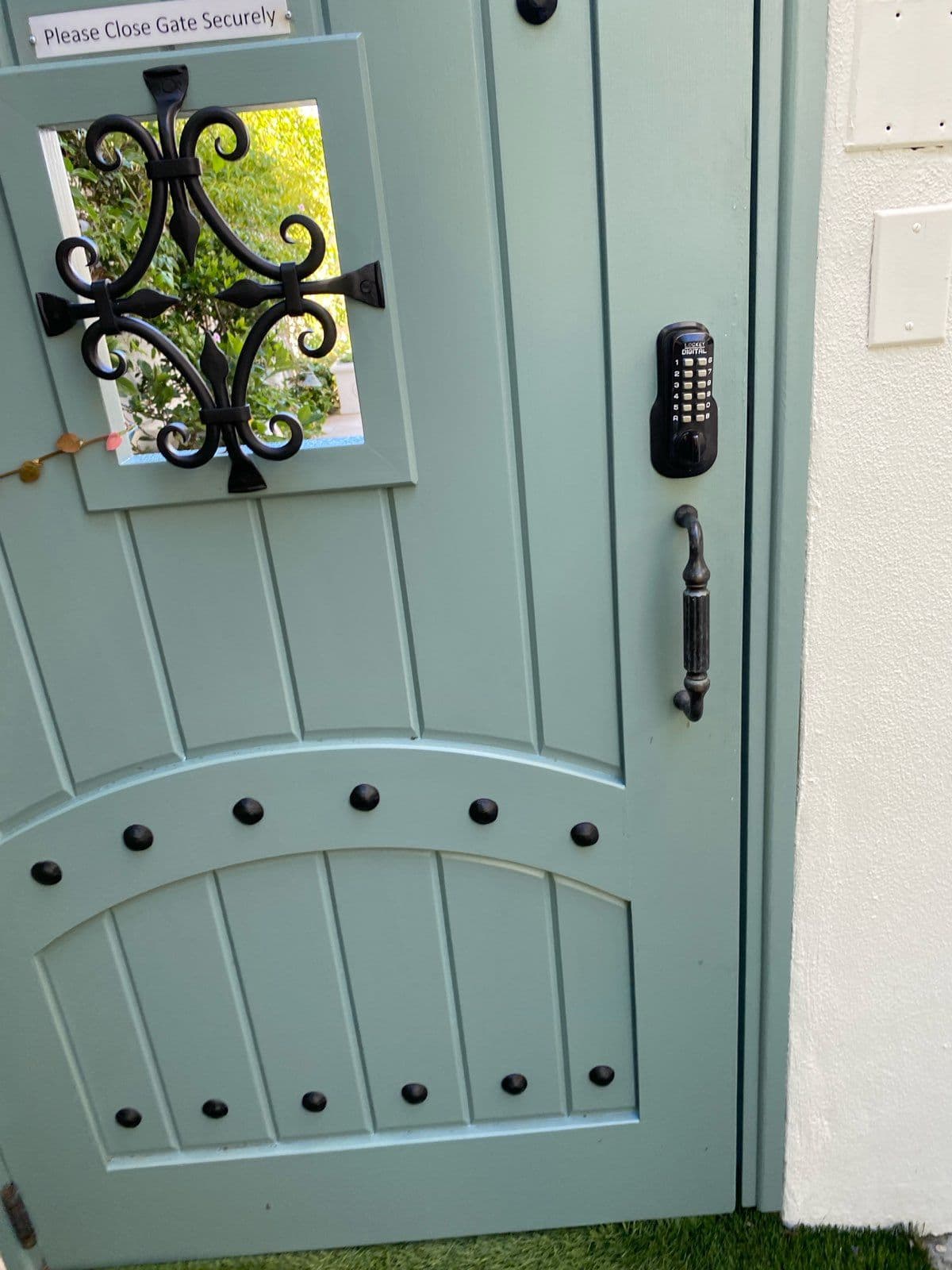
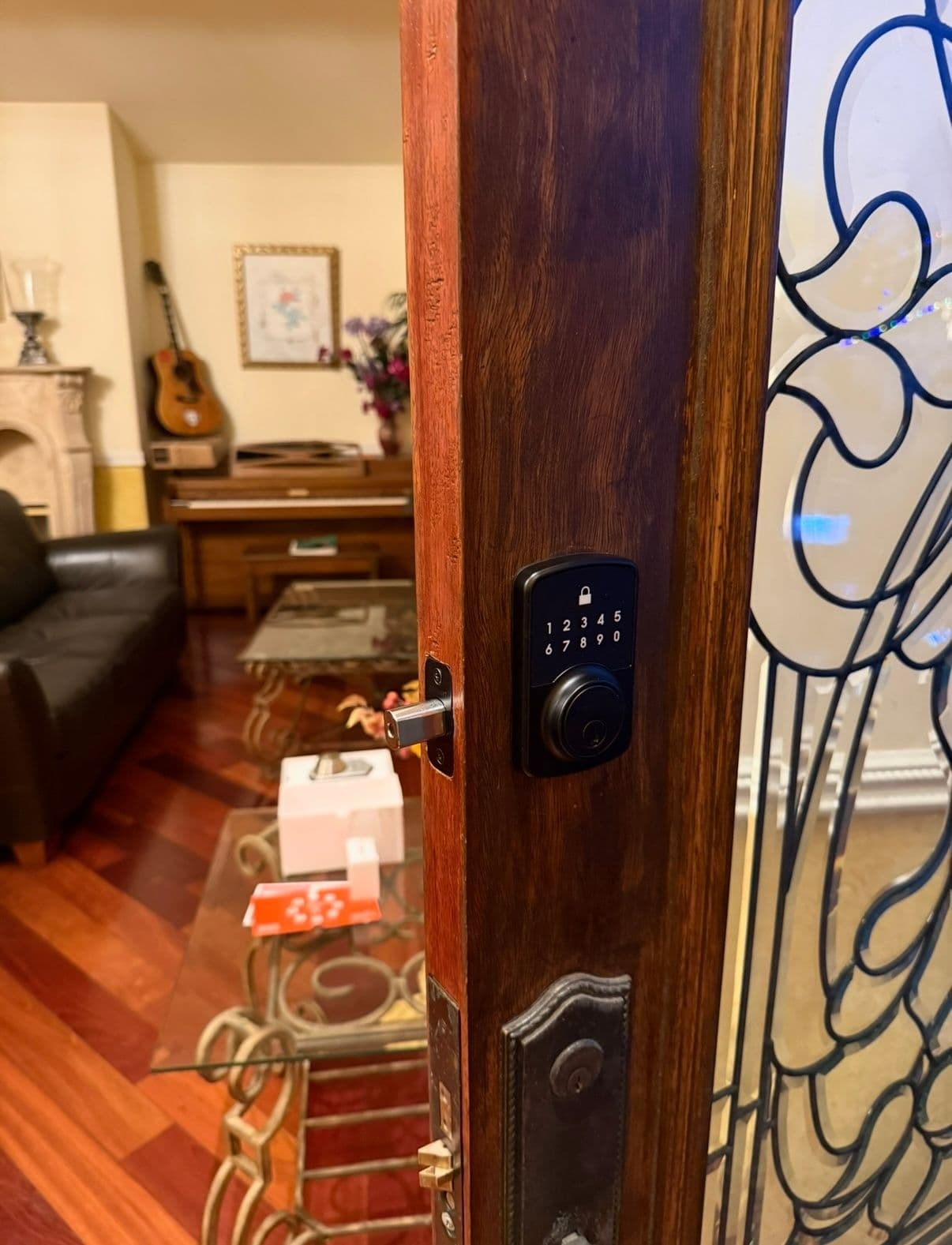
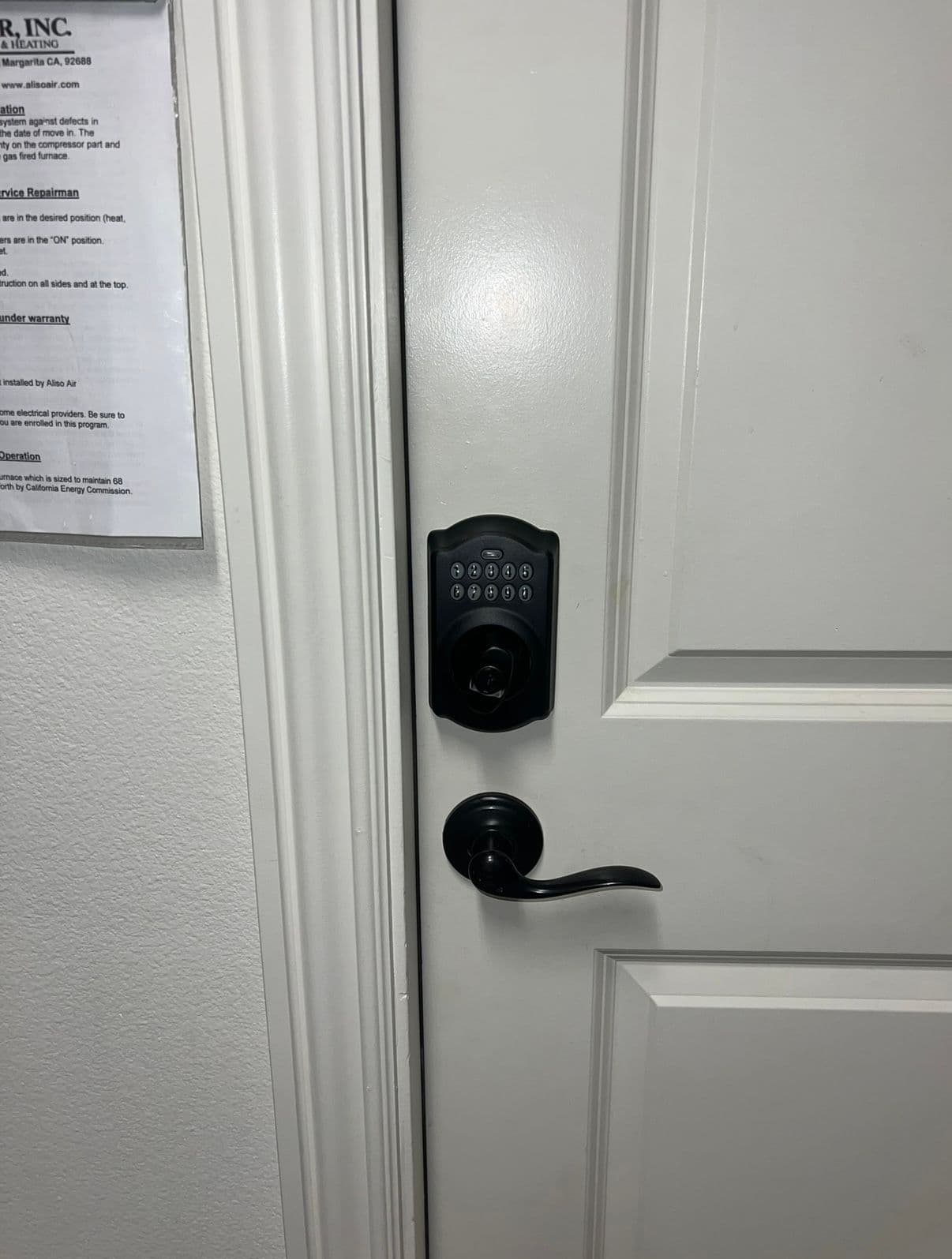
Real work, in real Orange County homes & businesses.
Service Areas
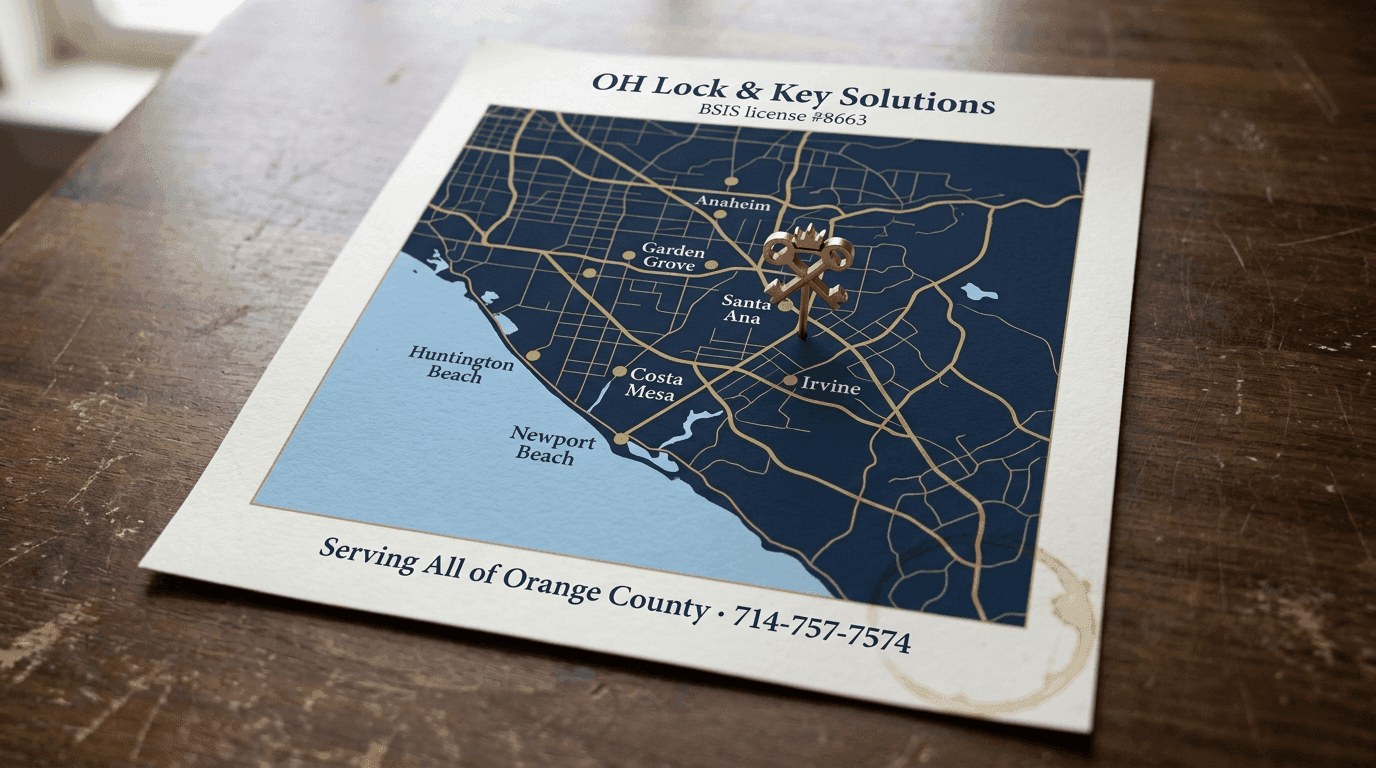
Serving all of Orange County.
Local techs across 314+ cities, communities, and neighborhoods. Fast dispatch from Santa Ana.
Coverage
All of Orange County — live dispatch radius.
In depth
Frequently asked questions about oc locksmith work across Orange CountyTap to read the full guide — pricing, licensing, common questions, and how we work in Orange County.
The questions below come straight from the calls and texts our dispatchers field every day from customers across Orange County. They are written to help you make a good decision before you hire any locksmith — not just us.
How fast can a real locksmith reach me in Orange County?
Under normal traffic conditions our nearest mobile unit is roughly 15 to 30 minutes from any address in Orange County. Late-night calls — typically between midnight and 5 a.m. — sometimes land closer to the 15-minute end because the freeways are clear. Heavy-traffic windows on the 5, 405, 55, or 91 can push the upper end of the range out by another 10 minutes. We will give you a live ETA the moment you call, not a vague "on the way." If your situation is unsafe — a child or pet locked inside a car or home, for example — say so when you call; we route those jobs ahead of routine ones.
What does a written quote actually include?
A real locksmith quote in California lists the service performed, the parts installed by manufacturer and model, the labor line, any after-hours surcharge, and the total. It also names the company, the technician, and the BSIS license number (#8663 for us). If a "locksmith" quotes you a $19 service call over the phone and refuses to put anything else in writing, you are talking to a call center, not a locksmith. Walk away. Bait-and-switch is the single most common locksmith scam in Southern California and the reason California requires BSIS licensing in the first place.
Are you actually licensed, insured, and bonded?
Yes. OH Lock and Key Solutions holds California BSIS license #8663. Every technician is background-checked through DOJ Live Scan as required by the state, carries general liability insurance, and is bonded. The license number is on every invoice, every truck, and every page of this website — and you can verify it directly on the State of California Department of Consumer Affairs license-lookup site at any time. We strongly recommend checking the BSIS number of any locksmith before they touch your hardware.
Do you charge a trip fee or service-call fee?
No standalone trip fee. The number on your written quote is the number you pay. If you decide not to move forward after we arrive and inspect — for whatever reason — you owe nothing for the visit. We can be that flexible because we work flat-rate on the most common jobs (lockouts, rekeys, smart-lock installs) and because we screen jobs carefully on the phone so the technician arrives with the right parts and the right tools.
Will you drill my lock?
Almost never on a routine residential or automotive lockout. Drilling is reserved for the small percentage of jobs where the lock is genuinely damaged, the cylinder is anti-pick high-security hardware, or a key has been broken off in a way that cannot be extracted. When drilling is the right call, we tell you in advance, quote the cost of the replacement cylinder up front, and complete both the entry and the new install in a single visit. A locksmith who arrives and immediately reaches for the drill on a standard residential deadbolt is either inexperienced or running a scam — either way, send them home.
Can you rekey my locks to match a single key?
Yes. Rekeying is one of the most common requests in Orange County — usually after a move-in, a roommate change, a contractor handover, or a vacation-rental turnover. We can rekey most pin-tumbler residential locks (Kwikset, Schlage, Defiant, Baldwin, Weiser, Yale residential, and many smart-lock backups) to a single key, and on commercial hardware we can rekey to a small master-key system that gives one master key to ownership and unique keys to staff. Rekeying is dramatically cheaper than replacing locks and the security level is identical when done correctly.
What smart locks do you recommend and install?
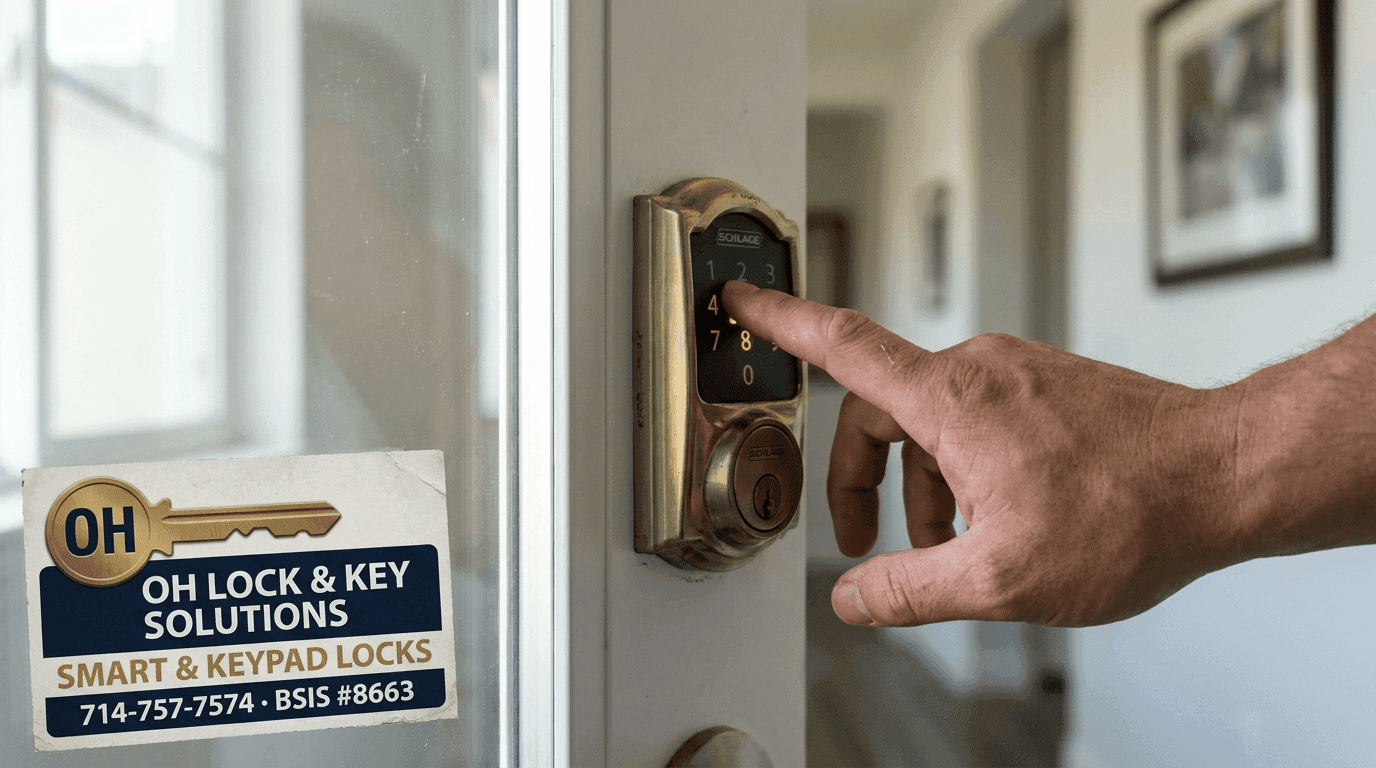
We install most major-brand smart locks and keypad locks: August, Yale Assure, Schlage Encode and Sense, Kwikset Halo, Level Bolt and Level Lock+, Aqara U100/U200, Lockly, and Ultraloq. We do not push a single brand — the right choice depends on your door, your Wi-Fi situation, whether you use Apple Home / Google Home / Alexa, whether you want a physical keyway as backup, and how the rest of your home is set up. We always leave a working mechanical keyway when one exists so you are never locked out by a dead battery or a service outage.
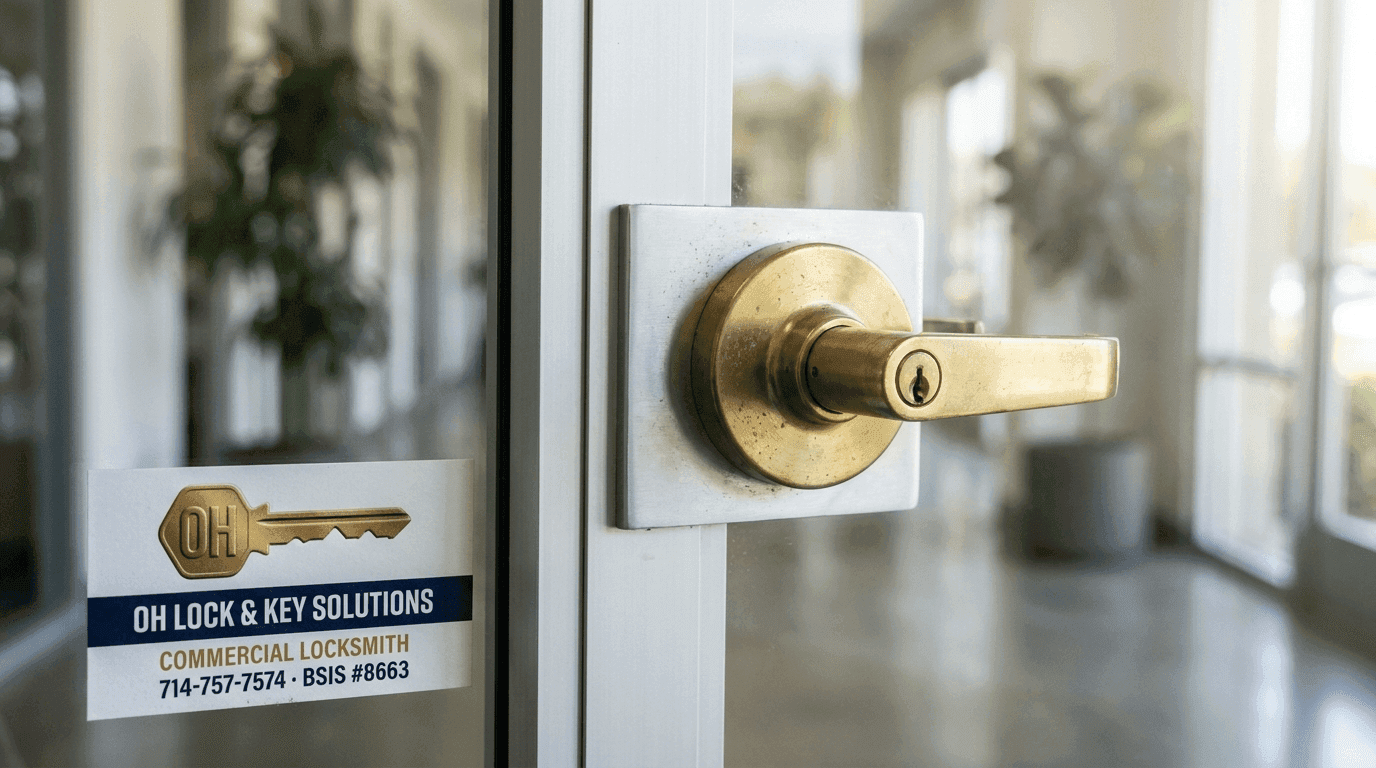
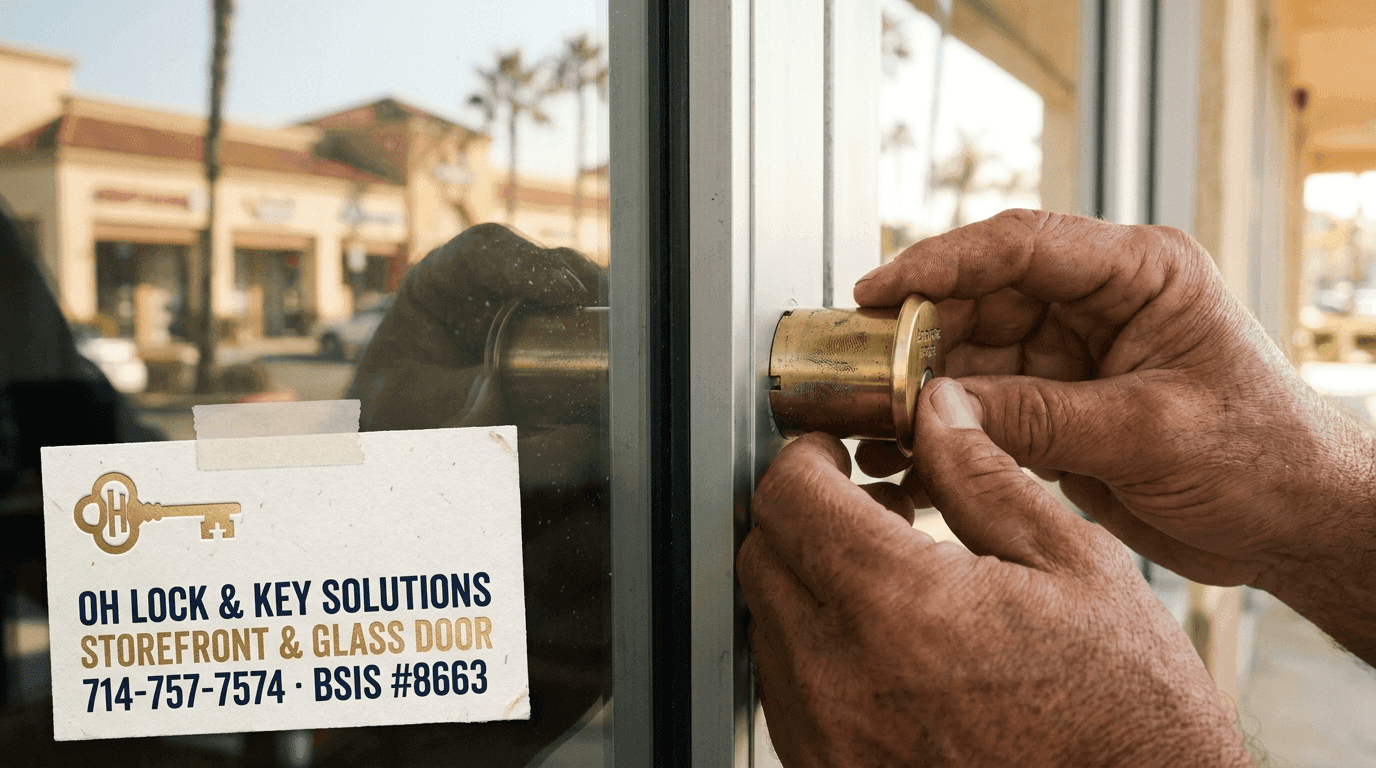
Do you handle commercial storefront and panic hardware?
Yes. Storefront aluminum doors with hook bolts and pivot hardware, narrow-stile deadbolts (Adams Rite and clones), panic and exit devices (Von Duprin, Detex, Falcon, Yale), electric strikes, magnetic locks, and door closers are all standard work for our commercial techs. We do new installs, repairs, and rekey/keying changes, and we can put a small storefront on a simple master-key system in a single visit. Our commercial customers in Orange County include retail, restaurants, medical offices, dental practices, fitness studios, churches, schools, and property managers.
Can you replace a car key or program a fob?
For the overwhelming majority of late-model Toyota, Honda, Lexus, Acura, Ford, GM, Chrysler, Jeep, Hyundai, Kia, Nissan, Mazda, BMW, and Tesla vehicles — yes, on-site, anywhere in Orange County. We carry transponder blanks, remote head keys, and proximity (smart) fobs and program them to your VIN with manufacturer-grade equipment. A handful of high-end European vehicles still require a dealer visit; we will tell you up front when that is the case so you do not waste a trip.
Do you do safe lockouts and combination changes?
Yes — residential gun safes, fire safes, floor safes, drop safes, and many commercial safes. Most safe lockouts are resolved without destructive entry by manipulating the lock or using a documented manufacturer override. We can also change combinations on most mechanical and electronic safe locks. Safe work is one of the higher-skill areas of locksmithing and is exactly where the difference between a BSIS-licensed locksmith and an unlicensed contractor becomes obvious.
Do you serve property managers and HOAs?
We work with dozens of property-management companies and HOA boards across Orange County, including Orange County when applicable. We can be added as a preferred vendor, work from a single PO or master-services agreement, invoice on net-30 terms, and provide standardized after-hours response for tenant lockouts. Master-key planning, key control logs, and standardized hardware specs are all part of the package.
What payment do you accept?
All major credit cards (Visa, Mastercard, American Express, Discover), debit cards, Apple Pay, Google Pay, Zelle, and cash. For commercial accounts we offer invoicing on net-15 or net-30 terms after a short qualification process. Every transaction generates a written receipt with the BSIS license number on it.
Is there a guarantee on the work?
Yes. Labor is guaranteed for 90 days against workmanship issues. Hardware is covered by the manufacturer's warranty — typically 1 year on entry-level locks and up to a lifetime mechanical / 5-year electronic warranty on premium hardware (Schlage, Yale, Kwikset SmartKey, Level, Baldwin). If anything we touched stops working as expected within the guarantee window, we come back and fix it; no extra trip charge.
What should I have ready when I call?
A few things speed the job up dramatically: a photo of the lock, key, or vehicle in question; the year, make, and model of any car involved; the address with a gate code or building entry if applicable; and a method of payment ready when the tech arrives. For commercial jobs add the contact person on site and any access restrictions. We can run the job without any of this — but with it, you usually save 10–15 minutes.
What if I just want a second opinion on another locksmith's quote?
Send us a photo of the quote and the hardware. We will tell you, plainly, whether the price is in line with the work, whether the parts list is honest, and whether the company is a legitimate locksmith or a call-center operation flipping the job to a subcontractor. This is a free service and we offer it because the locksmith industry has more than its share of bad actors. You do not have to hire us afterwards.
Still have a question that's not here?Text us a quick photo or message at 714-757-7574. A real locksmith will reply — usually within minutes during business hours, and around the clock for anything that sounds like an emergency.
How OH Lock and Key handles oc locksmith work across Orange County
Every job follows the same simple sequence regardless of where in Orange County it sits on the map. You call or text us — usually with a photo if you can manage it — and a real dispatcher (not a call center, not a bot) gathers the basics: address, hardware, urgency, and any access notes. From there we route the closest BSIS-licensed mobile unit to your location and give you a live ETA, a flat-rate quote, and a technician name and photo. There is no "up to" pricing, no dummy ranges, and no "the tech will let you know when he gets there" — those are tells of unlicensed call-center operations that scam customers across Southern California every single day.
On arrival the technician confirms the hardware in front of you, walks through the written quote a second time, and only then starts the work. For residential lockouts that means picking, bumping, or shimming the lock open without damaging the keyway. For automotive lockouts it means using a wedge and reach tool — never breaking a window or punching a lock. For commercial storefronts it means working the latch or the panic bar from the outside whenever the door geometry allows. Drilling is reserved for genuinely damaged or high-security cylinders, and even then we quote the replacement up front and complete both jobs in the same visit so you have a working door at the end.
Smart-lock installs follow a longer checklist because there is more to verify: door alignment and gap, deadbolt throw, strike-plate condition, Wi-Fi signal strength at the door, hub or bridge placement, and integration with whatever ecosystem you already use (Apple Home, Google Home, Alexa, Samsung SmartThings, Aqara, or Hubitat). We always leave the mechanical keyway functional when one exists. A smart lock that requires an app to open the front door is one firmware update or one dead battery away from a lockout — that is not a security upgrade, it is a downgrade.
Commercial work in Orange County typically starts with a brief site survey — usually fifteen minutes — where we walk every entry, photograph the existing hardware, and confirm the lock manufacturer, cylinder type, and any electronic access components in use. From there we write up a formal quote that itemizes parts and labor by door, lists the BSIS license number, and includes proposed warranty terms. Property managers and HOA boards often add us as a preferred vendor at this stage so future after-hours calls route to us automatically rather than to whichever ad-spend "locksmith" happens to be ranking that day.
Master-key planning deserves its own paragraph because it is one of the highest-leverage things a small business owner can do. A properly designed master-key system lets one master key open every cylinder while individual employees carry keys that only open their own zones — front of house, back of house, office, supply room, server closet. When an employee leaves you re-pin only their sub-zone instead of replacing every lock in the building. We design these systems on paper before any pins move, deliver written keying schedules, and provide a key-control log for management. The labor cost is often recovered the first time someone walks out with a key.
Pricing across Orange County follows the same flat-rate structure regardless of city or neighborhood. Standard residential lockouts during business hours are flat. After-hours lockouts add a clearly disclosed surcharge — disclosed when you call, not when the tech arrives. Rekeys are priced per cylinder with a discount past the first three. Smart-lock installs are priced as install-only when you supply the hardware or as install-plus-hardware when you want us to bring the lock. Automotive key replacement is quoted by year/make/model after you tell us what vehicle you have; we do not ask you to guess a generic "car key" price because the right answer differs by orders of magnitude between a 2008 transponder and a 2023 proximity fob.
The legal piece matters too. California Business and Professions Code requires every locksmith — and every locksmith employee who handles locks for compensation — to carry a current BSIS license. Unlicensed locksmithing is a misdemeanor. Hiring an unlicensed locksmith does not just expose you to scam pricing; it can void your homeowners or commercial insurance if anything goes wrong, because most policies have explicit "licensed contractor" language. Our BSIS number is #8663. You can look it up on the State of California Department of Consumer Affairs website in under sixty seconds. We encourage you to do that — not just for us, but for every locksmith you call, ever.
Finally, a note on how to compare quotes. A legitimate locksmith quote includes the company name and BSIS number, a description of the work, the manufacturer and model of any parts being installed, and a total price that already includes any after-hours surcharge. If a quote shows you a number under $30 over the phone and the technician arrives quoting hundreds without explanation, that is the textbook locksmith scam pattern. Send the technician away, call us, and we will give you a real second opinion at no cost. We do this several times a week. It is one of the genuinely useful things a real locksmith can do for Orange County, and we are happy to do it whether or not you end up hiring us.
A few practical notes worth knowing before you call any locksmith in Orange County. Keep a spare key with someone you trust — a neighbor, a family member three towns over, a co-worker. It is the single cheapest insurance against a lockout and it eliminates the after-hours surcharge entirely. If you own your home, consider a small mechanical lockbox bolted to a side gate or hidden in your backyard with a code only you and one other person know; this is what real estate agents use and it works fine for a personal spare too. If you rent, ask your landlord or property manager for the official building procedure for after-hours lockouts before one happens — many buildings have a contracted locksmith or front-desk procedure that is faster and cheaper than calling around at 2 a.m.
For car owners, the most important thing you can do is keep the make, model, year, and VIN of your vehicle written down somewhere that is not inside the car. Programming a new fob or transponder requires the VIN, and an unhelpful lock-screen on a dead phone in a locked car is the single most common reason a simple key replacement turns into a long, expensive day. Take a picture of your registration card and store it in a notes app or print it and keep it in your wallet. Cost: nothing. Time saved when you need it: hours.
For small business owners, the analog is a documented key plan. Even a one-page spreadsheet that lists every door, every key, who holds it, and when it was last rekeyed will save you thousands the first time an employee leaves under bad circumstances. A real locksmith will help you write this for free during the first install. We do this all the time across Orange County. The customers who plan this once never have to think about it again; the ones who do not end up calling us at midnight after an HR incident and paying a premium to rekey every door in the building before opening hours the next morning.
We hope this is useful whether or not you end up hiring OH Lock and Key Solutions. The locksmith industry in Southern California has a reputation problem and the only durable fix is for customers to be better-informed and for legitimate, licensed locksmiths to publish honest pricing and honest answers in writing — which is exactly what this page tries to do. If you want a second opinion on a quote, a recommendation on a smart lock, or just an honest answer about whether you actually need our service: text 714-757-7574. A real BSIS-licensed locksmith — license #8663 — will reply.
A quick history of the locksmith trade in Southern California
Locksmithing as a regulated trade in California goes back to the early twentieth century, but the modern licensing framework dates to 1995 when the legislature placed locksmiths under the Bureau of Security and Investigative Services (BSIS) within the Department of Consumer Affairs. The reason was simple: too many bad actors, too little accountability, and a series of high-profile consumer scams that left homeowners and small business owners with empty wallets and damaged doors. Today, every legitimate locksmith in California — every employee who touches a lock for compensation — must carry a current BSIS license, pass a state-administered exam, complete DOJ Live Scan fingerprinting, and renew the license every two years. There is no "trainee" exception, no "under supervision" loophole, and no "but we work through a national dispatch service" carve-out. If a locksmith on your driveway cannot show you a BSIS card, that locksmith is operating illegally. It is that simple.
Orange County in particular has a long history with the locksmith trade because of the mix of housing stock, commercial density, and the sheer number of vehicles registered in the county — more than two million at last count. The result is steady demand across all segments and a marketplace where the difference between a real locksmith shop and an out-of-state lead-generation operation matters enormously. The unfortunate trend over the last decade has been the rise of national dispatch companies that buy paid ads against local search terms, take the customer call, and then flip the job to whoever bids lowest on a contractor exchange — frequently an unlicensed individual with no real connection to the brand on the ad. We are the opposite of that model. Same team, same number, same trucks, same BSIS license, every time.
Hardware standards have evolved fast too. Twenty years ago a residential entry-door lock was a pin-tumbler cylinder that took two minutes to pick and another two minutes to bump. Today the same door might carry an anti-bump pin stack, a high-security keyway with restricted blanks, a Bluetooth radio for app integration, and a Z-Wave or Thread mesh-network module for whole-home automation — all in a package that looks identical to its 1990s ancestor from outside. The skill ceiling for a working locksmith has gone up accordingly. We train continuously on new hardware, attend the major industry events (ALOA, the SAVTA safe technicians convention, regional smart-home shows), and keep current on every major brand we install. When a customer asks "can you work on this lock," the answer is almost always yes — and if it is no, we tell you on the call rather than discover the problem on your driveway.
Automotive locksmithing has changed even more dramatically. The transponder revolution of the late 1990s — when manufacturers started embedding a chip in the key that the ignition module had to recognize — broke the traditional "copy-the-cuts" locksmith model for cars and forced everyone in the trade to invest in programming equipment, software subscriptions, and OEM-grade key blanks. The proximity-fob revolution of the 2010s did it again, and the rolling-code immobilizer cryptographic upgrades of the last few years have done it once more. The result is that car-key replacement, which used to be a forty-dollar trip to the hardware store, is now a piece of skilled mobile-technical work requiring four-figure equipment and constantly updated software. A locksmith who tells you they can do car keys but cannot tell you which brand of programming tool they use is bluffing. We use Autel and Topdon as our primary platforms with brand-specific add-ons for the harder vehicles. Ask any locksmith the same question before you let them touch your car.
On the smart-home side the same pattern of consolidation and standardization is finally arriving. Matter — the cross-vendor smart-home protocol backed by Apple, Google, Amazon, Samsung, and most major manufacturers — is making it possible to install one smart lock and have it work natively with whatever ecosystem the homeowner happens to use. Thread, the low-power mesh-networking layer underneath Matter, is reaching enough density in new homes that locks like the Aqara U200 and Yale Assure SL with Matter Module behave reliably out of the box. We pay attention to this because the most common complaint about smart locks five years ago — "it kept disconnecting" — has finally been solved at the protocol layer rather than the brand layer. If you bought a smart lock in 2019 that gave you headaches, the 2025 generation is genuinely different.
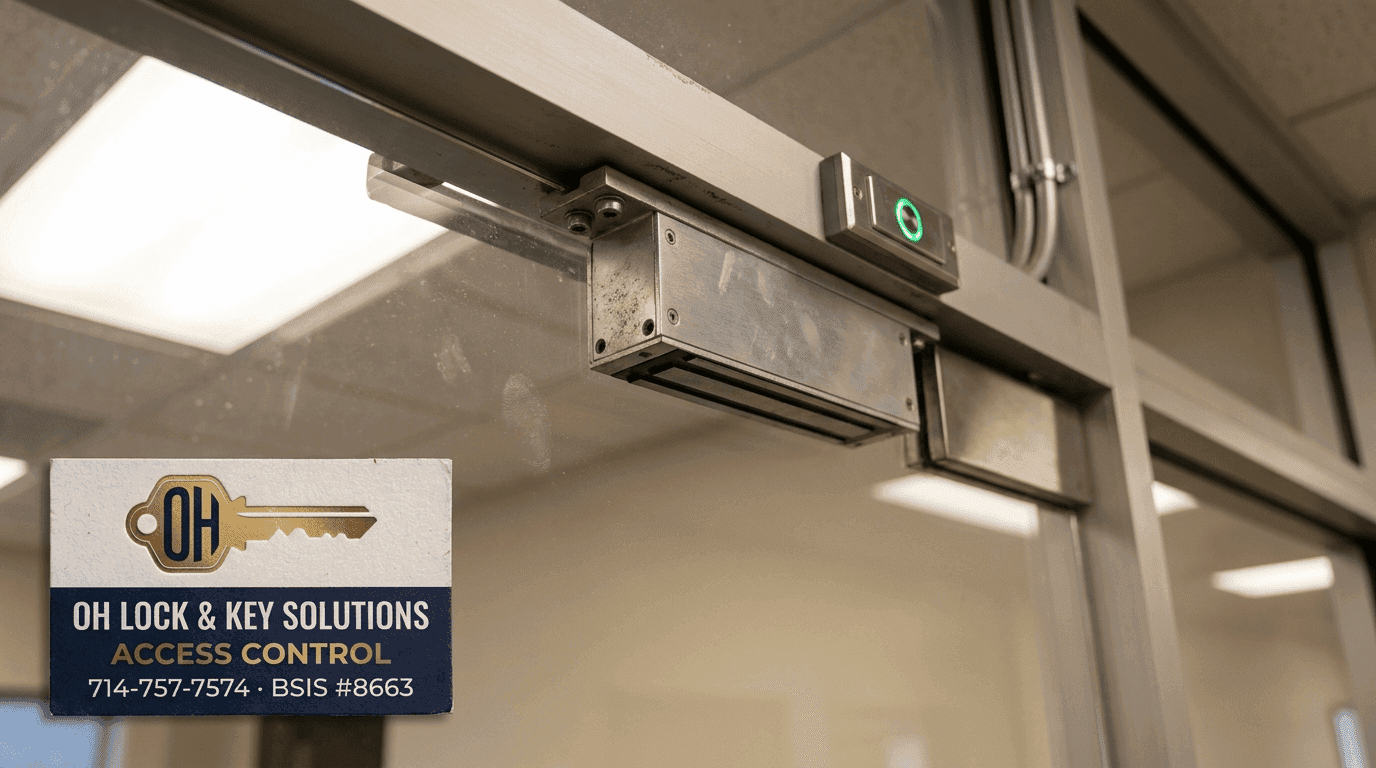
For commercial customers the analogous story is electronic access control. The traditional "wired prox-card reader and a server in the closet" model is being replaced by cloud-hosted platforms — Brivo, Openpath (now Avigilon Alta), Kisi, Verkada, Salto KS — that let a property manager add or revoke a credential from a phone in seconds. We install and service the major platforms and can usually retrofit a working mechanical-lock building onto a cloud-controlled access system without replacing every door. The cost-saving for a small business that previously rekeyed cylinders every time someone left is significant; the security improvement from real-time logging and instant credential revocation is even bigger.
For everything we touch, our written policy is the same: leave the property at least as secure as we found it, document the work, hand over keys and credentials in person, and stand behind the install. The locksmith trade has had to earn customer trust the hard way after decades of bad actors flooding the search results, and the way we earn it is by doing exactly what we said we would do — on time, in writing, for the agreed price. That standard is portable across Orange County and the rest of Orange County, and it is the reason we publish our BSIS number (#8663) on every page of this site, every truck, and every invoice we send.
One small thing worth saying explicitly: we are a small, local business. The phone number on this page reaches the dispatcher who actually rides with the technicians. There is no offshore call center, no national franchise upcharge, no surprise "corporate dispatch fee." That model — a national paid-search operation flipping calls to whichever unlicensed bidder is cheapest that hour — is the entire reason consumer reports keep flagging the locksmith industry as one of the most-scammed service categories in the United States. We have spent years building the alternative: a real shop with real trucks, real BSIS-licensed techs, and a single phone number that reaches the people who do the work. If you are comparing locksmiths in Orange County on price alone, please at least look up the BSIS number for each candidate first. The difference between a $19 service-call ad and a written quote with a license number is the difference between getting your door open and getting your wallet cleaned out.
If you got this far in the page, thank you for reading. Most people will scroll past everything below the call-to-action and grab the phone number, and that is exactly what these pages are for — they exist so the people who do read have a thorough, honest answer to the questions that come up before they pick a locksmith. We did not write any of this to fill space. It is the answer we would want if we were on the other side of the door, locked out at midnight, deciding which name on the first page of search results was worth trusting with our property. If something here helped you make a better decision — about us or about any other locksmith — that is the entire point.
Buyer's guide
How to choose a locksmith in Orange CountyTap to read the full guide — BSIS licensing, pricing red flags, and how to vet any locksmith before they touch your hardware.
The locksmith industry in Southern California has more than its share of bad actors. Walk through any consumer-protection bulletin from the California Attorney General's office or the Better Business Bureau's Los Angeles chapter and you will find the locksmith trade consistently in the top ten complaint categories — usually right next to roofing contractors and tow-truck operators. The pattern is so predictable that the FTC has published an explicit consumer alert on it. None of this is meant to discourage you from hiring a locksmith. Locksmiths solve real problems and most of us do excellent, honest work. It is meant to help you tell the difference between a real shop and a call-center scam before any money changes hands.
The single most important filter is the BSIS license. California requires every locksmith — every individual who touches a lock for compensation, employee or owner — to hold a current Bureau of Security and Investigative Services license. The license number is supposed to appear in advertising, on the truck, and on every invoice. You can verify any locksmith's license in under a minute at the Department of Consumer Affairs lookup page (search.dca.ca.gov). If a locksmith refuses to give you a license number over the phone, declines to put one on the invoice, or gives you a number that does not exist when you check it — they are unlicensed. Hang up and call someone else. Our BSIS number is #8663 and you are welcome (encouraged, really) to look it up before you call us.
The second filter is the quoted price over the phone. Real locksmith pricing is bounded — there are only so many ways a residential lockout, a rekey, or an automotive key replacement can play out, and a competent dispatcher can give you a tight range based on a one-minute conversation. If someone quotes you a $19 or $29 service-call fee with the explicit promise that any additional cost will be quoted on arrival, you are talking to a lead-aggregation operation, not a locksmith. The price will not be $19. The price will be whatever the contractor on your driveway thinks they can extract. Walk away from these calls before the technician shows up — once a truck is on the way the pressure to pay something to make them leave is real and they know it.
The third filter is the company's street address and review pattern. Real locksmith shops have a physical address that matches their service area, a long review history with photos and named technicians, and a phone number that, when you call it during normal business hours, is answered by a person who knows the trade. A locksmith whose Google profile is a residential apartment, whose reviews are all five stars from accounts that have reviewed nothing else, and whose phone routes to a national 800-number is — at best — a marketing operation flipping calls to subcontractors. The work might still get done, but the accountability is gone the moment a problem comes up.
The fourth filter is hardware brand and method of entry. Ask the dispatcher how the technician plans to open your lock. A real locksmith will name a method: picking, bumping, shimming, manipulation, or non-destructive bypass. A scam operation will dodge the question or say "we will figure it out on site." Ask, also, what brand of lock you have and what the technician knows about it. If they can name a few common Kwikset, Schlage, Yale, or Baldwin model lines and describe the difference between them in plain language, they are real. If they cannot, they are not.
Pricing structure deserves one more paragraph. Honest locksmith pricing is mostly flat-rate or tightly-itemized for the common jobs. A residential lockout during business hours has a flat number. A residential lockout after midnight has a higher flat number and the dispatcher tells you the surcharge on the call. A rekey is priced per cylinder with a small first-cylinder labor charge. A standard smart-lock install is priced as labor plus hardware. None of these requires a technician on your driveway to discover what the work costs. The dispatcher should be able to give you the full price, in dollars, before any truck rolls. If they cannot, ask why — and consider that an answer in itself.
For commercial customers a slightly different filter applies. You want a locksmith who can produce a one-page proposal with parts itemized by manufacturer and model, labor lines, warranty terms, and the BSIS license number on the company letterhead. The proposal should be signable as a purchase order or a small services agreement. If your locksmith of choice cannot produce that document on request, they are an emergency-only contractor and you need a different vendor for planned commercial work — master-key planning, access-control installs, multi-door rekeys, panic-hardware retrofits. The same locksmith may be excellent at after-hours lockouts and unsuitable for ten-door commercial buildouts; those are different skill levels and the marketplace rewards specialization. We do both — but we are honest about the difference, and we are happy to recommend other reputable Orange County shops for the rare job that is outside our wheelhouse.
Insurance and bonding is the fifth filter and the one most customers forget about. A real locksmith carries general liability insurance — typically $1M aggregate — and is bonded for the scope of work they perform. Insurance protects you in the small percentage of cases where something genuinely goes wrong on the job: a damaged door, a stripped frame, a key broken in a way that requires hardware replacement. Bonding protects you against employee dishonesty (locks contain a lot of trust, and a locksmith with access to your home has had access to a great deal of it). Ask any locksmith you are considering hiring whether they carry liability and a bond, and the dollar amount of each. The honest ones will tell you instantly. The scam operations will get vague or hang up.
Last filter: written guarantees. The locksmith trade has labor and parts warranties exactly like any other building trade. Reputable shops guarantee labor for at least 90 days against workmanship issues and pass through the manufacturer's warranty on hardware — typically 1 year for entry-level locks, up to lifetime mechanical for premium hardware. If a locksmith cannot describe their warranty in plain language, or if "all sales final" appears anywhere on their invoice, that is a tell. Real shops back their work because they expect to be in business in five years and they expect you to call them again. Scam operations expect you to never call them again. Their pricing reflects it.
If you apply all five filters — BSIS license, transparent phone pricing, real local address with a real review pattern, named methods of entry and hardware knowledge, written warranty plus insurance and bond — you will eliminate the vast majority of the bad actors before any truck arrives. The locksmiths who pass all five filters are not all OH Lock and Key Solutions. There are several other reputable shops in Orange County and we are happy to be compared to any of them. What we cannot do is win comparisons against $19 lead-generation ads, because the $19 is not a real number and the company behind it is not a real locksmith. We hope this guide saves you from learning that the expensive way. Call any locksmith — including us — with these questions ready, and the conversation will be short.
A short word on after-hours work. Roughly one in three locksmith calls in Orange County comes in between 9pm and 6am, and the after-hours premium is one of the most-abused line items in the trade. Honest after-hours pricing reflects the real cost of paying a technician overtime to be on call. It is typically twenty to forty percent more than a daytime rate. It is not three hundred percent more, and it is not a per-quarter-hour escalation that surprises you on the invoice. If you call a locksmith at 2am and the dispatcher cannot quote you the after-hours rate before sending a truck, the conversation should end there. Real shops publish their overnight rates on their website or quote them verbatim on the phone. The premium is real; the gouging is not.
On drilling: a competent locksmith opens almost every residential lock without drilling. Drilling is the technique of last resort — used for high-security cylinders that resist picking, locks with a deliberate anti-bypass design (Medeco, Mul-T-Lock, Abloy Protec), or locks that have been damaged from previous failed entry attempts. A typical Kwikset, Schlage, or Yale residential lock should never need to be drilled. If a locksmith arrives at a standard residential lockout and immediately reaches for a drill, they are either undertrained or running a scam. The drill destroys the lock and forces a hardware sale. Ask, on the phone before the truck rolls, whether drilling will be required. If the answer is "maybe" for a standard residential cylinder, call another locksmith.
On automotive work: car keys are a different trade than building locks. The skills overlap but only partly. Modern transponder keys, proximity fobs, and push-to-start systems require manufacturer-specific programming equipment and a current subscription to a key-programming database. Not every locksmith carries that equipment. A locksmith who does not specialize in automotive will often subcontract the work or refer you to a colleague who does — that is the honest response. A locksmith who insists they can program any car key without asking you the year, make, and model is bluffing. The right answer to "can you make me a key for a 2021 Honda Civic with push-to-start" is "yes, we have the AKL programmer for that platform, the all-key-lost procedure for a 2021 Honda takes about ninety minutes onsite, the price is X, and we'll need the VIN before we roll." If you get vaguer answers than that, find an automotive locksmith.
On safes: safe work is the most specialized end of the locksmith trade and the area where the most underqualified work happens. Real safe technicians belong to the Safe and Vault Technicians Association (SAVTA) and have invested in dialer scopes, change-key kits, and manipulation experience that takes years to develop. A locksmith who shows up at a residential gun safe and immediately starts drilling the dial is, again, choosing destruction over skill — the safe will work after the drill but the relocker will be triggered, the boltwork will need replacement, and the bill will be three times what manipulation would have cost. If you have a safe to open and the locksmith on the phone cannot describe a non-destructive opening approach, call someone else. SAVTA maintains a public directory and most large metros have at least one qualified safe technician.
On smart locks: the smart-lock category has matured a great deal since the early Yale and Kwikset Bluetooth experiments. A modern Wi-Fi or Matter smart lock from August, Yale Assure, Schlage Encode, Level, or Aqara is genuinely a better lock for most homes than a basic deadbolt — fewer keys to manage, audit logs that tell you when each family member came home, the ability to give the dog walker a code that only works on Tuesdays from 10 to 11. But the installation is unforgiving. A smart deadbolt that is mounted on an out-of-square door, or driven through a strike plate that does not align, will run its motor against resistance every time it engages, drain its batteries in weeks, and eventually strip its drive gear. A real locksmith installing a smart lock will adjust the strike, plane the door if needed, set the bolt throw precisely, and walk you through the app pairing. A scam locksmith will hand you the lock half-installed and leave. Ask what the install includes before the truck rolls.
On rekeying: rekeying is the technique of changing the pins inside an existing lock so that the old key no longer works and a new key does. It is dramatically cheaper than replacing the lock — typically twenty to thirty dollars per cylinder versus a hundred or more for a new lockset. It is also faster, less invasive (no door modification), and just as secure when done correctly. After buying a home, after a roommate moves out, after losing a key, after a contractor returns the loaner — rekeying is almost always the right answer. Replacement is only necessary when the existing lock is damaged, has reached end-of-life on its mechanical wear, or is being upgraded to a different security grade. A locksmith who insists on replacement for every job is either undertrained on rekey procedure or running a hardware-sales scheme. Either way, the work costs you more than it should.
On master-key systems: a master key system is a careful pinning design that lets one master key open every lock in a building while individual change keys open only the locks assigned to them. It is the single most useful security tool for any business with multiple employees and multiple zones — managers carry the master, employees carry their change keys, the cleaning crew carries a sub-master that opens only common areas. Designing a master system is engineering work, not a quick job. The locksmith needs a floor plan, a list of access groups, a count of doors per group, and a plan for future growth. The pinning charts are then computed (often with software) and the cylinders are pinned to the chart. A locksmith who can produce a master-key chart and walk you through it is a real commercial locksmith. A locksmith who promises to "just master all the locks together" without producing a chart is going to give you a system with security holes — keys that open more than they should, or change keys that accidentally open each other's locks (a defect known in the trade as a "cross-key"). Ask to see the chart before any work begins.
On access control: the commercial access-control market has consolidated in the last five years around a handful of cloud-managed platforms. Brivo, Avigilon Alta (formerly Openpath), Kisi, Verkada Access, and Salto KS dominate the small-to-mid-business segment. Each platform has tradeoffs — Brivo has the longest install base and the most integrations; Alta has the cleanest mobile credential experience; Kisi has the simplest pricing; Verkada bundles cameras and access on one pane of glass; Salto KS works with offline-capable battery-powered locks for buildings without wired infrastructure. The locksmith you hire for access-control work should be a certified installer for at least one of these platforms and should be able to explain the others honestly — including telling you when your building is a better fit for a competitor's product than the one they sell. A locksmith who only sells one platform and dismisses all others is selling, not consulting. We carry certifications across multiple platforms and pick the right one for the building.
On warranties and recalls: the lock industry has occasional recalls and frequent silent revisions. A Kwikset SmartKey cylinder from 2008 is not the same lock as a Kwikset SmartKey cylinder from 2022 — the keyway has been hardened, the bumping-resistant features have been redesigned, and the warranty terms have been tightened. A locksmith who is current with the industry will know which hardware revisions to install in your home, which legacy products to avoid (the original 2008 SmartKey is bypassable in under a minute with a screwdriver — a fact the manufacturer eventually acknowledged), and how to file warranty claims with the manufacturer on your behalf when something fails. If you bought hardware online and want it installed, ask the locksmith if they will honor the manufacturer warranty through their account. Many will, for a small handling fee, because dealing with the manufacturer directly as a consumer is painful.
On finishes and matching: hardware finish is one of the most-asked questions on remodel jobs and one of the more frustrating ones in practice. The industry uses BHMA codes for standard finishes — 605 is bright brass, 606 is satin brass, 612 is satin bronze, 613 is oil-rubbed bronze, 619 is satin nickel, 625 is bright chrome, 626 is satin chrome, 716 is dark bronze powder coat — and the same code from two different manufacturers will not look identical. Schlage's 619 looks slightly different from Yale's 619 because the underlying alloy and the finishing process differ. If you are matching new hardware to existing locks in a home, bring a sample to the locksmith or have them order matching samples first. Returns on installed hardware in the wrong finish are at the locksmith's discretion and almost never free.
On lock grades and what they actually mean: the ANSI/BHMA grade system runs from Grade 3 (light residential) to Grade 1 (commercial-duty). The grade is determined by lab-testing the lock against three criteria: cycle count (how many open-close cycles before failure), strength (how much force the lock resists before destruction), and durability (corrosion, vandalism, abuse). A Grade 1 deadbolt has been tested to 250,000 operating cycles, 360 pounds of static load on the bolt, and ten strike-impact tests at 75 foot-pounds. A Grade 3 deadbolt has been tested to a tenth of that. The price difference between a Grade 3 Kwikset at the big box store and a Grade 1 Schlage at a locksmith supply is around thirty dollars; the difference in real-world security is much larger. Spend the thirty dollars.
On weather and environment: Southern California is mild compared to most of the country, but coastal salt spray, garage-door heat, and the occasional Santa Ana wind event do real damage to outdoor hardware over a decade. Brass and stainless-steel cylinders outlast zinc-die-cast cylinders by a factor of two or three in coastal Orange County. If your home is within five miles of the ocean, ask your locksmith for marine-grade or stainless hardware on the exterior locks. The premium is small and the lifetime is long.
On hardware sources: a real locksmith stocks hardware from a wholesale distributor and passes through the manufacturer warranty. A scam locksmith carries cheap aftermarket clones, often counterfeit, that look like name-brand hardware but fail within a year. Ask, when the technician arrives, where the hardware was sourced from. Real locksmith inventory comes in branded boxes with intact factory seals and includes a manufacturer warranty card. Loose hardware in unbranded plastic bags is a tell. Counterfeit hardware is widespread on overseas marketplaces and a meaningful share of bargain-priced "Schlage" or "Kwikset" locks sold online are not authentic.
On the second opinion: if a locksmith on your driveway quotes a number that surprises you, you are allowed to send them away unpaid for the service call only, and call another shop. California law does not require you to accept the quote just because the truck rolled. The first locksmith may bill you for the trip — typically the disclosed service-call fee, not the inflated estimate — and that is the cost of a second opinion. It is almost always worth paying. Locksmiths who refuse to leave without payment of the full inflated estimate are crossing into criminal territory; if it happens to you, the Orange County Sheriff's non-emergency line will help and the locksmith's BSIS license is at risk.
On scope creep: a locksmith arrives for a lockout, opens the door, then suggests rekeying every lock in the house, replacing the deadbolt, adding a smart lock, and upgrading the strike plates. Some of those suggestions may be legitimately useful; some are upselling. The honest way to handle this is for the locksmith to complete the original job, present the additional recommendations as a separate written estimate with no pressure to accept, and leave. If the upsell becomes high-pressure, the locksmith has crossed a line. You are allowed to say no, pay the original quoted amount, and have the technician leave. Document the interaction in writing afterward — a short email summarizing what happened — and consider filing a complaint with BSIS if the pressure was severe. The trade polices itself in part through these complaints; honest locksmiths benefit when scam operations are reported.
Worth mentioning one more time: our BSIS license number is #8663. Our phone is 714-757-7574. Our shop is in Orange County. Every technician on our trucks is an employee of OH Lock and Key Solutions — not a subcontractor — and every truck on the road carries the same name, the same number, and the same license. Whether or not you end up hiring us, we hope you take this guide with you. The next time you need a locksmith in Orange County, ask the questions above. The trade is full of good people; you just have to know how to find them.
Glossary
Locksmith terms, explained in plain languageTap to expand a plain-language glossary of the terms locksmiths actually use — BSIS, cylinder, deadbolt, transponder, and more.
The locksmith trade has its own vocabulary and most of it never makes it onto the invoice in a form a homeowner can understand. Here is a short, opinionated glossary of the terms we use most often on the phone and on the truck. If you are calling around for a quote, knowing these terms will make every conversation shorter and every estimate easier to compare.
BSIS — the California Bureau of Security and Investigative Services, the state agency that licenses locksmiths. Every legal locksmith in California carries a BSIS license number, which must appear in advertising and on invoices. You can verify any BSIS license at search.dca.ca.gov. Unlicensed locksmith work is a misdemeanor in California with escalating penalties for repeat offenses, and unlicensed work voids most homeowner insurance coverage for any damage caused during the job. Ask for the BSIS number before any truck rolls.
Cylinder — the round, removable core of a lock that contains the pins. When a locksmith says "rekey the cylinder," they mean swap the pins inside that round core to match a different key. Most modern deadbolts have an exterior cylinder and an interior thumbturn. A double-cylinder deadbolt has a key cylinder on both sides — less common in residential because of fire-code concerns about quick exit during emergencies.
Deadbolt — a lock whose bolt is moved by direct mechanical action of the key or thumbturn, with no spring mechanism. The defining feature is that the bolt cannot be pushed back into the lock by force alone. Deadbolts are graded by ANSI/BHMA — Grade 1 is commercial-duty, Grade 2 is heavy residential, Grade 3 is light residential. The grade tells you how many cycles the lock is rated for and how much kick-in force it will resist. Spend the money on Grade 1 or Grade 2 for any door that opens to the outside.
Keyway — the shape of the slot in the lock that accepts a particular key blank. Kwikset KW1, Schlage SC1, and Yale Y1 are the three most common residential keyways in Southern California. A key cut for one keyway will not enter another — this is by design, to prevent key duplication across manufacturer ecosystems. If you have a Kwikset front door and a Schlage back door, you cannot put them on one key without rekeying both locks to a common keyway, which sometimes requires replacing one of the lock cylinders entirely.
Master key — in a properly designed system, a single key that opens multiple locks that each have their own individual change keys. A master-key system has a hierarchy: change keys at the bottom (one per lock), sub-masters in the middle (open a group of locks), and the grand master at the top (opens everything). Designing a master system requires a written pinning chart and careful planning to avoid "cross-keys" — accidental keys that open more than they should. Never let a locksmith master a building without producing the chart first.
Restricted keyway — a key blank that the manufacturer controls distribution of, so that copies cannot be made at a hardware store kiosk. Medeco, Mul-T-Lock, ASSA, and Abloy all sell restricted keyways under various names. The benefit is real key control — the only way to get a duplicate is to contact the original locksmith with proper authorization. The tradeoff is cost and a slightly longer lead time when you do need a new key. For high-stakes residential or any commercial setting with employee turnover, restricted keys are worth it.
Bump key — a specially-cut key that exploits a weakness in pin-tumbler locks by transferring kinetic energy through the pins, briefly aligning them at the shear line and allowing the lock to turn. Bumping became famous around 2005 when videos showing the technique went viral. Modern high-security locks include anti-bump features — spool pins, serrated pins, or a sidebar mechanism — that make the technique nearly impossible. If your front-door lock is more than ten years old and you have not upgraded to a bump-resistant model, it is overdue.
Pick-resistant — a marketing term for locks whose pin design makes picking slow and unreliable. True high-security locks (Medeco, Mul-T-Lock, Abloy Protec, BiLock) have additional mechanical features beyond pin design — sidebars, rotating pins, multi-axis keys — that resist picking for tens of minutes even by trained operators. A "pick-resistant" Kwikset SmartKey is a different category of lock than a Medeco M3 and the cost reflects it. For any door that is your last line of defense, the price difference is worth it.
Strike plate — the metal plate mounted on the door frame that the deadbolt extends into. The strike plate is, surprisingly often, the weakest point in a residential lock installation. Builder-grade strike plates are held in by two short screws into the door jamb — a determined kick will rip them out of the frame within seconds. A proper security strike plate uses four three-inch screws that drive past the jamb into the framing studs behind it, plus a deeper bolt pocket. Upgrading a strike plate is twenty dollars in parts and twenty minutes of labor and is the single highest-leverage residential security upgrade most homes can make.
Mortise lock — a lock body that mounts inside a rectangular pocket cut into the edge of the door, rather than through a round hole bored through the face. Mortise locks are heavier, more secure, and easier to service than tubular cylindrical locks, and they remain the standard for commercial doors and high-end residential. The pocket cut is the limiting factor — a door not pre-cut for a mortise lock requires a router and an experienced installer to retrofit. If your home has a mortise lock, you have a serious lock; treat it well and it will outlast the house.
Transponder key — a car key with a small RFID chip embedded in the plastic head. The chip transmits a unique ID to a receiver near the ignition; the car's computer compares the ID against an authorized list and only allows the engine to start if there is a match. Transponder systems were introduced around 1995 in response to skyrocketing vehicle theft rates and they cut grand-theft-auto numbers dramatically over the next decade. Modern proximity fobs use the same underlying technology with additional encryption and rolling-code features that defeat replay attacks.
AKL — "all keys lost," the automotive locksmith term for the situation where the customer has no working key at all and the technician must program a new key from scratch. AKL procedures are vehicle-specific and require manufacturer programming equipment plus, on many late-model vehicles, a security delay (typically 30 to 60 minutes) before the new key can be enrolled. The delay is anti-theft; there is no way to bypass it. If you are quoted an AKL price that does not account for the security delay, the locksmith has not done this on your vehicle before.
EEPROM — the small non-volatile memory chip inside many car immobilizer modules that stores the list of authorized key IDs. Some older vehicles allow EEPROM-direct programming — the locksmith desolders the chip, reads it, modifies it, and re-flashes it — as an alternative to dealer programming. The technique is fading as manufacturers move to encrypted, sealed modules that resist EEPROM-direct work. For most cars from 2018 onward, dealer-equivalent programming via OBD is the only path and the locksmith must have a current subscription to the manufacturer's security gateway.
Smart credential — a digital key delivered to a phone or wearable, typically over Bluetooth or NFC. The major smart-lock and access-control platforms support smart credentials with varying levels of security and convenience. Apple Home Key and Google Home credentials are now widely supported. Cloud-issued credentials can be granted, revoked, and audited remotely — the operational advantage over physical keys is large for any building with more than a handful of doors or any household with more than a handful of users. The tradeoff is dependency on the cloud platform; choose a vendor with a credible long-term roadmap.
Schlage Primus — Schlage's high-security keyway, used widely in California institutional settings (schools, hospitals, government buildings). Primus keys have a secondary milling on the side of the blade that engages a finger pin in the lock, providing UL 437 listing for pick and drill resistance. Primus is a restricted keyway; duplicates must be ordered through an authorized Schlage dealer with signature authorization on file. For commercial customers wanting institutional-grade key control without the cost of Medeco, Primus is the standard recommendation.
Panic hardware — also called exit devices or crash bars, the horizontal push-bar mechanisms required by fire code on commercial exit doors. Panic hardware must allow egress with a single motion and without prior knowledge of the door operation. Grade 1 panic hardware (the only grade legal on most commercial exits) is rated for at least 1,000,000 cycles. Common manufacturers include Von Duprin, Sargent, Yale, and Detex. Retrofitting panic hardware to an existing commercial door is a precise job — the strike, the door reinforcement, and the closer all need to be reconciled with the new bar. If your commercial building has a panic-bar issue, do not delay; the fire inspector will not.
Electric strike — a strike plate with a solenoid that releases the keeper on command, allowing a door equipped with a regular lockset to be buzzed open from inside the building or via an access-control system. Electric strikes come in fail-safe (locked when power is applied, unlocked when power fails) and fail-secure (locked when power fails) configurations. The choice depends on whether the door is on a life-safety egress path; fire code requires fail-safe on egress, fail-secure is typical elsewhere. A competent locksmith doing access-control work will know the difference and will pull the relevant code section if you ask.
Magnetic lock — a flat electromagnet mounted on the door frame that holds the door closed against an armature plate on the door itself. Maglocks are quieter than electric strikes and can be sized up to 1,500 pounds of holding force. They require continuous power, an REX (request-to-exit) sensor, and fire-alarm tie-in for egress code compliance. Maglocks are not appropriate for every door — they require a flat steel frame to mount on, and they consume noticeably more power than alternatives — but for glass-store-front doors and aluminum-storefront entries they are often the only practical option.
Door closer — the hydraulic mechanism mounted at the top of a door that returns the door to closed after each opening. Door closers are graded by ANSI/BHMA and sized to the door weight; an undersized closer will fail to close the door fully, an oversized closer will slam the door so hard the lock cannot latch. Closer adjustment is one of the most-neglected pieces of building maintenance — a poorly-adjusted closer can leave a door cracked open all night, defeating every lock on the premises. A few minutes of locksmith time to tune the closer is one of the highest-value commercial maintenance calls available.
Pin-tumbler lock — the most common lock mechanism in use globally, invented by Linus Yale Jr. in the 1860s and substantially unchanged since. A row of spring-loaded pins of varying lengths sits above the plug; when the correct key is inserted, the cuts on the key blade push each pin stack to exactly the shear line, allowing the plug to rotate. Pin-tumbler is mechanical, low-power, weather-tolerant, and well-understood. It has known weaknesses (picking, bumping) but the high-security variants address those weaknesses without abandoning the underlying mechanism. The pin-tumbler will outlive every smart lock currently for sale.
Disc-detainer lock — an alternative lock mechanism using rotating discs rather than pins. Disc-detainer locks (Abloy is the most famous manufacturer) resist picking by traditional methods because there is no spring tension on the discs to give the picker tactile feedback. They are common in commercial padlock applications and in some European residential markets. The tradeoff is cost and a smaller dealer network in the United States; if you have a disc-detainer lock you need serviced, find a locksmith who handles them before the lock fails.
Wafer lock — a simpler mechanism using flat wafers rather than round pins, common in low-security applications like file cabinets, mailboxes, and older automotive locks. Wafer locks are easy to pick and easy to impression and should not be relied on for any meaningful security. If you are still using a wafer lock to protect anything valuable, upgrade.
Tubular lock — the round pin arrangement found in coin-operated machines, vending equipment, and some bicycle locks. Tubular locks have a circular pin pattern that, for many years, was considered pick-resistant. A series of inexpensive bypass tools released in the late 1990s changed that picture; a modern tubular lock is roughly as secure as a wafer lock. If your business relies on tubular locks for cash boxes or vending, plan an upgrade.
Bittings — the specific depth pattern cut into a key, expressed as a series of numbers. A typical Schlage key has five bittings, each with a depth from 0 to 9, giving 100,000 theoretical key differs (in practice limited by mechanical-cutting-step constraints). When a locksmith decodes a lock to make a new key, they are reading the bittings; when a locksmith pins a lock to a specific key, they are matching the pin stacks to the bitting pattern. Bitting codes are sensitive information and should never be written on tags attached to keys.
Impressioning — a locksmith technique for making a working key without disassembling the lock, by inserting a blank, manipulating it inside the keyway, and reading the marks the pins leave on the blank. Impressioning is a slower technique than picking but produces a working key at the end — useful when the customer needs a key, not just an open lock. Impressioning is also one of the rarer locksmith skills; it takes years to develop reliably.
Locksmith van inventory — a working locksmith truck carries about $15,000 of inventory: blanks for the common keyways, pin kits for major manufacturers, replacement deadbolts in standard finishes, smart locks from two or three brands, automotive transponder blanks for the most-requested vehicles, programming equipment, picks, drill bits, key-cutting machines (manual and code-cutting), and a thousand small parts. A truck stocked to this level can complete most jobs on the first visit. A truck stocked below this level — the typical lead-aggregator subcontractor truck — carries enough to get the door open and not much more. Ask, on the phone, whether the locksmith stocks the part you need. If they cannot answer, they do not.
Service-call fee — the flat charge a locksmith adds to cover the cost of dispatching a truck. Honest service-call fees in Orange County run between $35 and $85 depending on the time of day, the distance from the shop, and the locksmith's overhead structure. The fee is disclosed on the phone before the truck rolls and is included in the final invoice (not added on top of it). A service-call fee under $25 advertised on a website is a marketing number used to win the click; the real number arrives on the driveway. A service-call fee over $150 for a routine residential job in central Orange County is overpriced. The midpoint is where the real shops live.
Bonded and insured — the phrase used to describe a locksmith who carries both general liability insurance (typically $1M aggregate) and an employee-dishonesty bond. Insurance protects you against accidents on the job; bonding protects you against intentional theft by the technician. Both should be in place at any locksmith you let into your home. Ask the dispatcher for the carrier names and the policy numbers; a real shop will give them to you without hesitation. A locksmith who hedges on this question is uninsured, unbonded, or both.
Locksmith association memberships — ALOA (Associated Locksmiths of America), CALSA (California Locksmiths Association), and SAVTA (Safe and Vault Technicians Association) are the three primary trade associations for locksmiths in the United States. Membership is not legally required but it is a positive signal: associations require continuing education, enforce a code of ethics, and offer apprenticeship paths. A locksmith with current ALOA or CALSA membership has invested in their training and reputation in a way that lead-aggregator subcontractors do not. Ask the dispatcher; the question is short.
UL listing — Underwriters Laboratories rates locks, safes, and security hardware against destructive-attack standards. UL 437 is the standard for high-security cylinders; a UL 437 lock has resisted standardized picking, drilling, and pulling attacks for at least ten minutes under laboratory conditions. UL TL-15 and TL-30 are ratings for safes, indicating a working safecracker with tools was unable to open the safe in fifteen or thirty minutes respectively. For most homes a UL 437 cylinder on the front door and a UL RSC (Residential Security Container) rated gun safe are appropriate; commercial environments may need higher ratings. A locksmith who can match the UL rating to the threat model is doing real consulting; one who upsells the highest rating regardless of threat is selling.
Key control — the policy framework around who can request, receive, and duplicate keys for a system. Real key control is a written document, signed by the responsible party (building owner or facility manager), that names the authorized requesters and the duplication rules. The locksmith keeps the signed authorization on file and refuses to duplicate restricted keys for anyone not on the list. Buildings without written key control eventually leak keys to unauthorized parties — former employees, former tenants, former contractors — and the leak is invisible until something goes wrong. A short conversation with your locksmith about key control is one of the most cost-effective security upgrades available for any business.
Pinning chart — the engineering document that specifies which pins go in which positions for every lock in a master-key system. A pinning chart looks like a spreadsheet, with one row per lock and one column per pin position. The cells contain the pin lengths (in the manufacturer's numbering system) and the resulting key bittings. The chart is the locksmith's permanent record of the system; it is also what allows the same system to be expanded or rekeyed years later without redesigning from scratch. Any commercial master-key system without a pinning chart is a system without continuity. If your business has a master-key system and you do not know where the chart is, ask your locksmith to recreate it.
That is the working vocabulary of an Orange County locksmith. If you can use these terms on the phone, the quote you get back will be tighter and easier to compare across shops. If a locksmith stumbles over any of them, you have learned something useful about who you are about to hire.
One last note on the trade. The locksmith industry is older than most of the houses it services. The mechanisms have evolved across centuries — warded locks gave way to lever locks gave way to pin-tumblers gave way to high-security cylinders gave way to smart credentials — but the underlying job is unchanged. A locksmith is the person you call when the system that controls who enters a space has stopped working, or needs to start working differently. The work happens at the boundary between the physical world and the trust relationships of the people who own and use the space. It is a serious responsibility and the locksmiths who take it seriously are the ones worth hiring. Everyone else is selling something else under a locksmith's name. With a little vocabulary and the filters in the buyer's guide above, the difference becomes easy to spot. Thank you for reading. Whether you call us, call another reputable Orange County shop, or fix the problem yourself with the information in these pages, we are glad you came by. Stay safe, lock your doors, and keep a spare key with a neighbor you trust. If a future version of this guide would help you on a more specific topic — commercial access-control selection, automotive transponder programming workflows, master-key planning for multi-tenant properties, or head-to-head smart-lock comparisons across the major brands — let us know on the contact form and we will write it up. The locksmith trade is happy to share what it knows; that is how the honest end of the trade out-competes the scam operations, one well-informed customer at a time. We will keep the writing here updated as the standards, hardware, and software evolve, and we are always glad to hear feedback from readers who spotted something we got wrong or something we should add.
Need a locksmith in Orange County right now?
Tap a button — a BSIS-licensed technician will be on the way.